
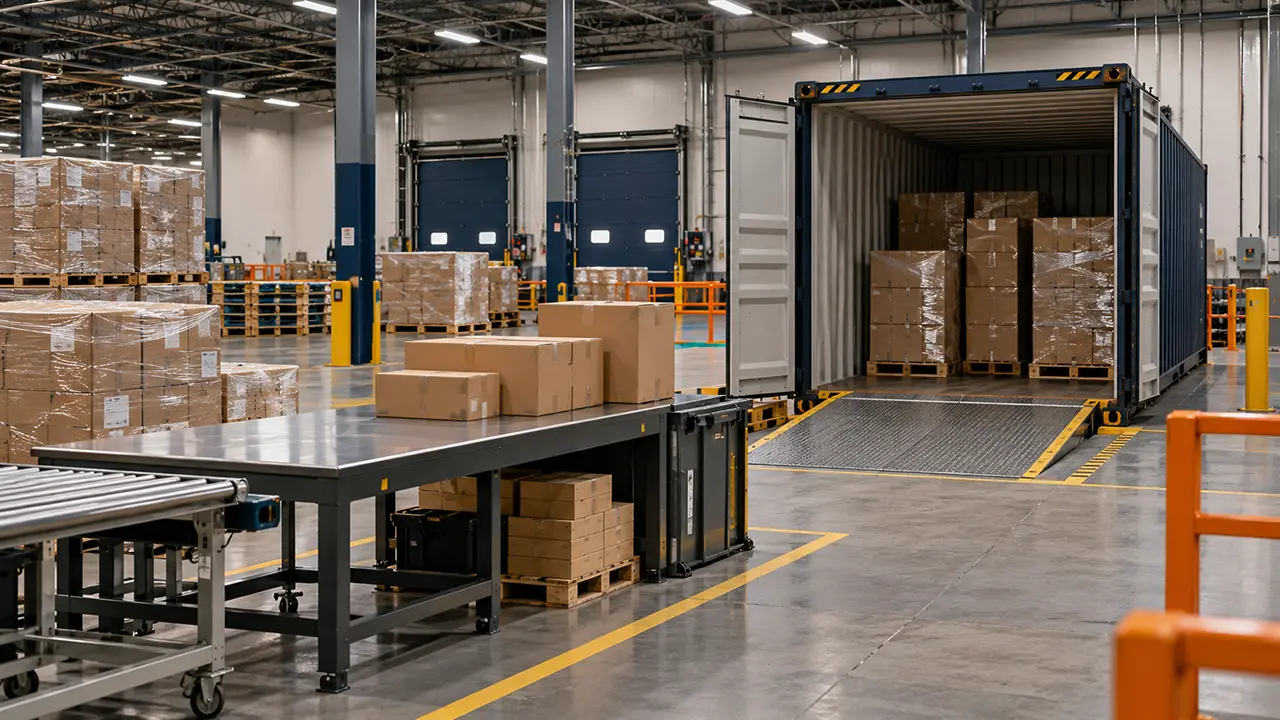
CBSA Customs Examination: What Happens When an Import Is Inspected?
A CBSA customs examination means that the Canada Border Services Agency has selected imported goods for additional review before they can be released into Canadian commerce. An examination may involve checking shipment information, inspecting packages or examining a marine container. It does not automatically mean the importer has broken a rule. The goods may nevertheless be delayed while the examination, any required follow-up and the release decision are completed.
For a Canadian business importing from China, the immediate priorities are to confirm the shipment’s status and location, identify the responsible carrier or warehouse, have the customs broker check the release documentation, and obtain a written explanation of any handling, storage or other charges. This article focuses specifically on what happens during a customs examination and what the importer should do. For the standard import process outside an examination, use our China-to-Canada customs clearance guide.
Why Does the CBSA Examine an Imported Shipment?
The CBSA examines commercial goods to determine whether they are admissible and whether their declaration complies with Canadian requirements. An examination can help officers verify what the products are, how many packages have arrived, their reported value or origin, and whether permits or other controls apply.
Possible review points include the product description on the commercial invoice, tariff classification, quantity, declared value, origin markings, and documentation required by another participating government department. An import shipment may also be held for a regulatory reason that is not a physical examination. Importers should ask which status actually applies rather than assuming every customs delay is a full container inspection.
CBSA does not publish a shipment-specific explanation for every risk-selection decision, and no freight forwarder can promise that a compliant shipment will never be examined. Accurate documents improve readiness and reduce avoidable corrections, but do not remove the agency’s authority to inspect. See the CBSA guidance on reporting and examination of commercial goods.
Customs Hold, Document Review and Physical Examination: What Is the Difference?
| Shipment status | What it may mean | Practical next question |
|---|---|---|
| Release not yet confirmed | The import release request may be pending, missing, rejected or awaiting review. | Has the carrier reported arrival, and does the customs broker have the correct transaction and cargo references? |
| Documentation or compliance review | An officer or another agency may need supporting product, permit, value or origin information. | What exact information or document has been requested, and who must submit it? |
| Referred for examination | Goods have been selected for an examination and may require positioning or physical presentation. | Where are the goods, who controls presentation, and has an examination appointment or movement been arranged? |
| CBSA release granted | Customs removal authorization has been issued, subject to the applicable release decision. | Has the carrier, terminal or warehouse also completed its own payment and cargo-release conditions? |
| Cargo available for pickup | The facility confirms the goods can be collected under its operating rules. | What is the location, pickup reference, receiving appointment and last free-storage date? |
Customs release and cargo availability are different milestones. A shipment might satisfy CBSA requirements but still be waiting for CFS unpacking, terminal handling, an agent’s release instruction or a truck appointment. Conversely, physical arrival at a facility does not authorize an importer to remove goods that remain under customs control.
What Happens During a CBSA Customs Examination?
The exact process depends on whether the shipment travels by ocean, air or another mode, the location of the goods, and the examination requested. A typical commercial-import workflow may include the following steps.
- Arrival and status reporting. The carrier reports the shipment through the applicable cargo-reporting process. The importer or licensed broker checks the import release status and supporting references.
- Referral or information request. If goods require review, the parties receive the relevant instructions through the normal carrier, broker or CBSA communication channels. The importer should establish whether physical presentation or additional documentation is needed.
- Movement or presentation. For an applicable physical examination, the carrier, terminal or warehouse coordinates access to the goods. A marine container may have to move to an examination facility; a parcel or pallet may be handled differently.
- Inspection and supporting checks. CBSA officers carry out the examination within the agency’s authority. They may examine the goods, packaging or shipment information and request further records if necessary.
- Follow-up and decision. If questions remain, the importer or broker may need to correct information or provide supporting evidence. Goods are released only when the applicable requirements are satisfied.
- Reloading, recovery and onward delivery. Where goods were unloaded or a container was moved, the industry parties complete the related handling. Cargo becomes available subject to the carrier or facility’s separate release and pickup arrangements.
These steps are a practical sequence, not a guaranteed processing schedule. Some activities can overlap, and others can take longer due to facility capacity, product review or incomplete documentation.
Marine container examinations
For ocean freight, the CBSA describes several possible examination approaches, including large-scale imaging, dockside checks and examinations requiring movement to a specialized facility. A selected container may incur transport, positioning, unloading or reloading work carried out by industry operators. The agency’s marine container examination process explains which parties perform and pay for the different activities.
LCL and air-cargo considerations
With LCL, an individual consignment shares a container with other shipments. Its examination and recovery arrangements depend on the consolidator, CFS and responsible parties; do not assume the procedure is identical to that of a dedicated FCL container. With air freight, cargo presentation may involve an airport cargo facility, airline or handler rather than an ocean container examination location. Request the actual cargo status and controlling facility before arranging a collection.
Who Pays for a CBSA Examination in Canada?
CBSA does not normally invoice the importer for the agency’s own examination officers, tools and inspection activities. However, the importer can still face substantial third-party costs to make goods available for examination. This distinction matters whenever an invoice is described loosely as a “customs inspection fee.”
| Cost or activity | Responsible party or billing principle | What to request |
|---|---|---|
| CBSA examination personnel and agency equipment | CBSA bears the cost of its own marine examination services. | Do not confuse agency examination activity with a private facility invoice. |
| Container movement and positioning | Carriers or facility operators may charge for moving a selected container to and from an examination area. | Movement record, provider and applicable tariff or pass-through basis. |
| Unloading, examination presentation and reloading | Industry handling charges may be invoiced through the carrier, warehouse or other operator and passed to the importer. | Itemized work performed and who approved or required it. |
| Warehouse, terminal or CFS storage | The applicable facility’s free-time and tariff conditions determine any charge. | Availability date, storage start time, tariff and last free day. |
| Brokerage work and additional documents | A customs broker or service provider may charge for work under its agreement. | The broker’s fee schedule and the extra work actually performed. |
| Import duty and GST | Government import amounts arise from the customs accounting rules, not from an examination-handling invoice. | Separate customs-accounting records and assessed amounts. |
The CBSA states that shipping-industry costs to present goods for an examination are generally passed on to the importer. The final commercial allocation can depend on the transportation contract, tariff and responsible parties. Request a written explanation rather than assuming every cost will be waived because the shipment passed examination. Detailed destination CFS and release charges are covered separately in our LCL destination charges guide.
How Long Can an Import Shipment Be Held for Examination?
There is no dependable, universal number of days that applies to every CBSA examination. The timeline can depend on the kind of review, cargo location, availability of an examination facility, documents requested, product-specific rules and follow-up decisions. A published vessel ETA or flight arrival date does not represent a confirmed customs release date.
Ask the broker or forwarder to report milestones, not an unqualified promise that the shipment will “clear in two days.” Useful milestones include: arrival recorded, examination referral received, presentation arranged, goods received at the appropriate facility, examination completed, further information requested, CBSA released, private carrier/warehouse released, and ready for pickup.
When estimating the effect on a retail launch or replenishment order, separate the unknown examination delay from the remaining inland transport and warehouse receiving tasks. Our shipping time guide explains how to build realistic supplier-to-warehouse timelines without mistaking ETA for inventory availability.
What Documents Should the Importer Prepare?
Have a consistent shipment record ready before the goods arrive. The precise documents depend on the commodity, service and reason for review; the list below is a practical starting point rather than an exhaustive legal requirement for every shipment.
- Commercial invoice: product-specific descriptions, seller and buyer, quantities, transaction values, currency and named trade terms.
- Packing list: actual cartons, pallets, marks, measurements and gross/net weights that can be reconciled with the physical cargo.
- Transport record: bill of lading, house bill, air waybill or cargo-control information as applicable, with matching consignee and shipment references.
- Product information: materials, use, model or part identifiers, technical specifications and photographs if an officer needs clarification.
- Classification and origin support: evidence supporting the HS classification, country of origin and declared customs value.
- Product-specific permits or certificates: only where required for the particular goods and applicable Canadian rules.
- Importer and broker details: relevant Business Number/import-export account, CARM arrangements and the authorized broker’s contact information where used.
If a document contains a mistake, work with the licensed broker on the correct release or accounting procedure. Do not alter an invoice retroactively to disguise the true goods or value. For the general shipment paperwork and handover process, consult the commercial shipping documents checklist. The CBSA’s Memorandum D17-1-4 on commercial goods release explains the official release framework.
What Should You Ask Your Forwarder or Customs Broker During a Hold?
A short, specific status request is more useful than asking whether customs is “done yet.” Send the shipment reference and ask the responsible provider to confirm the following:
- Has the shipment arrived at the customs destination shown on the cargo documents?
- Is there a physical examination referral, an information request, or simply a pending or rejected release request?
- Which organization currently controls the cargo, and at what facility is it located?
- What exact information is missing, and who is responsible for providing it?
- Is movement, unpacking or examination presentation required, and has it been arranged?
- Has the CBSA release decision been issued? If not, what event is outstanding?
- Which terminal, CFS, carrier, examination or storage charges could accrue?
- When does the applicable free-storage period end, and who is monitoring that deadline?
- Once release is confirmed, what must still happen before the truck can collect the goods?
Keep the answers and supporting documents in one shipment record. If several parties are involved—supplier, forwarder, ocean carrier, broker, destination agent and warehouse—identify one person responsible for coordinating updates without implying that a forwarder can control the CBSA’s decision.
Practical Scenario: An LCL Shipment Held After Arrival
Consider a fictional Canadian wholesale importer waiting for six pallets of merchandise from several Chinese suppliers. The shared ocean container has arrived in Canada, but the shipment has not been released for pickup. The importer sees a vessel arrival notice and assumes delivery can proceed immediately.
The first useful action is to establish whether the goods are pending deconsolidation at a CFS, have been referred for an examination, lack an accepted release request, or have another hold. These are different problems requiring different actions.
If an examination has been ordered, the provider should identify the cargo’s current location and the party coordinating any required presentation. The broker checks the invoice and packing-list descriptions against the goods and responds to any CBSA document requests. Meanwhile, the importer asks for the applicable storage tariff and last free day, and alerts its warehouse that the original delivery appointment is no longer reliable.
After CBSA release, the importer still needs confirmation that the destination agent and CFS have met their separate release conditions. Only then should the truck and receiving appointment be finalized. This is an operational illustration, not an actual TopShipping case study or a statement about how long a real examination takes.
Storage, Demurrage and Detention: Which Delays Create Which Costs?
Storage can arise at a terminal, CFS or warehouse if the shipment remains beyond a facility’s applicable free period. An FCL container may also be exposed to carrier equipment-related charges such as demurrage or detention under the relevant contracts. These are not interchangeable terms, and they are not automatic penalties imposed by the CBSA simply because an examination was selected.
Ask for the actual billed service, charging period and tariff source. A selected shipment may generate handling costs even where no separate customs examination invoice exists, while a delay that is resolved promptly may involve no storage charge at all. See the guide to demurrage, detention and storage in Canada for the distinctions and prevention measures.
What if Goods Are Damaged During an Examination?
Record the issue without assuming every party has the same responsibility. Ask the cargo handler or consignee to photograph the condition of the packages and contents, note discrepancies on receiving records where appropriate, and preserve packaging and handling documents. Report concerns promptly through the responsible carrier or shipment coordinator and the insurance contact if cover was arranged.
The CBSA’s marine examination guidance explains that responsibility for damage depends on who had control of the goods at the relevant stage; the shipping line is identified as a first point of contact for marine-container concerns. Do not claim that the CBSA automatically pays for third-party handling damage or that any cargo policy covers every cause of loss. The applicable contract, evidence and insurance wording matter.
Pre-Shipment Checklist to Reduce Avoidable Customs Problems
Nothing can guarantee exemption from an examination, but good preparation can reduce errors that delay a release decision or make a review harder to resolve.
- Use a clear commercial description for every product, not only broad labels such as “parts” or “accessories.”
- Check that the invoice, packing list and cargo documents agree on packages, weights and shipment references.
- Identify restricted, regulated or controlled products before the goods leave China.
- Confirm the importer account, authorized broker and applicable CARM arrangements before arrival.
- Keep technical product information and relevant origin evidence accessible.
- Confirm the final Canadian release point, facility contact and destination agent.
- Ask in advance how examination-related handling, storage and other unexpected charges would be communicated and billed.
- For important inventory dates, allow contingency rather than assuming customs release on the arrival date.
- Make sure the receiver or 3PL can accommodate a revised delivery appointment.
If a commercial shipment is already delayed, collect its current status and the relevant documents before requesting a revised delivery plan. TopShipping can review the freight coordination details and available shipment information for China-origin cargo; actual inspection and customs-release decisions remain with the CBSA and other authorized parties.
Prepare an Accurate Freight Plan Around Customs Release
For a China-to-Canada commercial shipment, send the supplier location, product description, Incoterm, package details, Canadian destination and any known customs hold or document request. Ask that the proposed transportation scope identify the responsible customs broker, cargo-release point, and potential terminal or warehouse handling separately.
If you are planning the shipment before booking, you can request a China-to-Canada freight quote using the available cargo information. If your goods are already under examination, use your authorized broker and the responsible carrier or warehouse to address the official release process; a new freight quotation alone cannot lift a customs hold.
FAQ — CBSA Customs Examination: What Happens When an Import Is Inspected?
The Canada Border Services Agency may examine imported goods to check their identity, quantity, declared value, origin, admissibility or compliance with Canadian import requirements. A referral does not automatically mean the importer has violated a rule. The examination or related document review can still delay customs release. Ask your licensed customs broker or shipment coordinator which specific status applies rather than assuming every pending release is a physical inspection.
The CBSA pays for its own officers, equipment and examination activities. However, an importer can be billed for services supplied by private carriers, examination facilities or warehouse operators, such as transporting a container, positioning goods, unloading, reloading or storage. The amount depends on the service, facility, carrier terms and tariff; there is no universal CBSA inspection-fee amount for all shipments. Request an itemized explanation of each third-party charge.
There is no reliable single timeframe for every shipment. The duration depends on the examination type, facility arrangements, the cargo's location, any additional records requested and other applicable regulatory checks. A vessel or flight arrival does not establish the customs release date. Ask for confirmed milestones: referral, presentation, examination completion, outstanding documents, release decision and final cargo availability. Plan delivery appointments only after the relevant release and facility conditions are confirmed.
Start by obtaining the shipment references and asking your customs broker or forwarder whether the issue is an examination referral, a document request or an unprocessed or rejected release. Confirm the cargo location, any missing information, who controls examination presentation and when storage could begin. Keep the invoice, packing list and product information ready. Do not arrange final pickup until customs release and the carrier or warehouse's own release conditions are both confirmed.
Not necessarily. CBSA release authorizes removal from customs control, but the container freight station, airport handler, terminal or carrier may still require cargo unpacking, payment, a delivery order, a pickup reference or a receiving appointment. Confirm that the facility has marked the particular shipment available and obtain the last free-storage date. Customs release and physical cargo availability are separate operational milestones, especially for consolidated LCL shipments.