
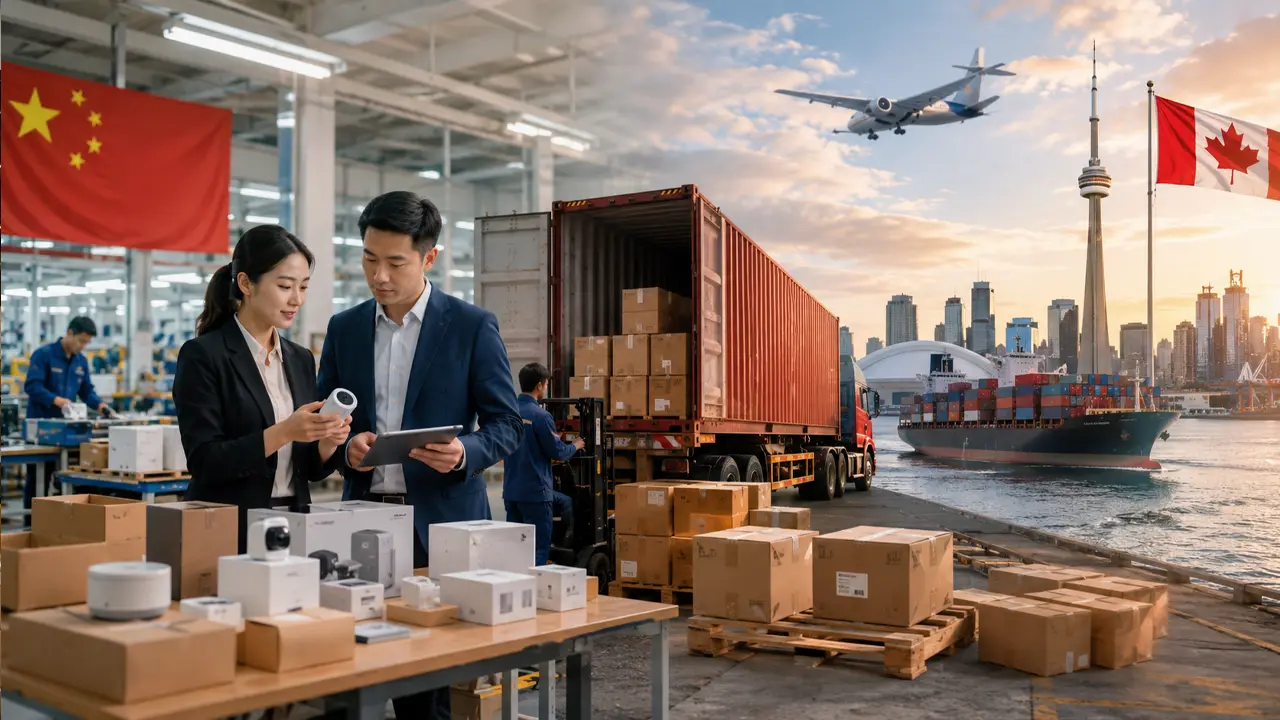
Product sourcing from China involves more than identifying a supplier with an acceptable unit price. Canadian importers also need to evaluate supplier suitability, product specifications, samples, packaging, order quantities, export readiness and the logistics requirements that affect the final landed cost.
TopShipping supports commercial sourcing by coordinating supplier search and communication, verification steps, sample handling, pre-shipment checks and shipment preparation in China. Once an order is ready, the sourcing process can connect directly with the appropriate China-to-Canada shipping plan.
What Product Sourcing from China Includes
A practical sourcing process should connect product selection with supplier evaluation, order preparation and freight planning rather than treating each stage separately.
Depending on the product and agreed scope, sourcing support may include:
- Searching for suitable manufacturers or suppliers in China
- Comparing manufacturers and trading companies
- Reviewing supplier information and commercial suitability
- Supporting additional factory verification when required
- Coordinating product samples
- Reviewing product and packaging requirements
- Performing agreed basic pre-shipment checks
- Reviewing commercial invoice and packing information
- Coordinating orders from multiple suppliers
- Preparing cargo for air, LCL or FCL transportation
- Supporting customs and final-delivery planning for Canada
The exact service scope depends on the product category, supplier situation, order value, quantity, technical requirements, timeline and planned shipping method.
Who Needs Product Sourcing Support?
Product sourcing support is intended for Canadian businesses purchasing commercial goods from Chinese suppliers that need help with supplier search, communication, verification, product preparation or the transition from purchasing to international freight.
Typical users include:
- Canadian importers searching for new products or suppliers
- E-commerce businesses sourcing inventory from China
- Amazon, marketplace and Shopify sellers
- Wholesalers and distributors
- Retailers developing private-label products
- Startups evaluating potential manufacturers
- Businesses comparing several Chinese suppliers
- Importers combining sourcing and freight coordination
Businesses sourcing inventory specifically for online sales can also review our e-commerce shipping from China to Canada guide for fulfillment, inventory and freight-planning considerations.
Supplier Search in China
Finding a supplier is only the first step. A company that appears suitable online may still be a poor fit for the required product, order quantity, technical specifications, packaging standards, payment structure or export requirements.
A structured supplier search can help with:
- Identifying suppliers for the required product category
- Comparing manufacturers and trading companies
- Reviewing available products and specifications
- Confirming whether the supplier handles commercial export orders
- Comparing minimum order quantities and production expectations
- Reducing time spent communicating with unsuitable suppliers
- Preparing a shortlist for samples or further verification
Supplier selection should also consider logistics. A product with a low factory price may produce a poor landed cost if it has inefficient packaging, high volumetric weight, difficult pickup conditions or unexpected Canadian import requirements.
Supplier Verification and Factory Verification
Supplier verification helps reduce sourcing risk before payment, production or shipment. The appropriate review depends on the order value, product complexity and level of commercial exposure.
Initial verification may consider:
- Company and business information
- Supplier communication and responsiveness
- Product experience and specifications
- Manufacturing or trading-company status where relevant
- Export experience
- Sample consistency
- Commercial documents supplied by the seller
Additional factory verification may be appropriate when:
- The order value is significant
- The supplier is new to the buyer
- Production capability needs to be confirmed
- The product has technical or regulatory requirements
- Tooling, customization or private-label production is involved
- The commercial risk justifies a deeper review
Supplier Verification Has Defined Limits
Supplier verification, sample review and pre-shipment checks can reduce sourcing risk, but they do not guarantee future supplier performance, regulatory compliance or defect-free production. The verification and inspection scope should match the product, order value, technical requirements and level of commercial risk.
Product Samples Before a Larger Order
For many new suppliers or new products, a sample provides a practical opportunity to review the item before committing to larger production or wholesale quantities.
Sample coordination can help evaluate:
- Product appearance and basic workmanship
- Material, dimensions and visible specifications
- Packaging and labelling
- Colour or finish
- Basic functionality where it can be reasonably checked
- Differences between competing suppliers
- Whether product changes are required before production
A sample is not a guarantee that bulk production will be identical. For larger orders, customized products or higher-risk goods, additional production controls or pre-shipment inspection may still be appropriate.
Pre-Shipment Product and Cargo Checks
Before commercial goods are released for export, the agreed review scope may include visible product condition, quantity, carton count, packaging, labels and comparison with supplier-provided order or packing information.
Basic pre-shipment checks may include:
- Visible external product condition
- Carton or pallet count
- Packaging condition
- Labels and shipping marks
- Quantity against supplied order information
- Visible damage
- Comparison with supplier packing details
These checks should not be confused with formal laboratory testing, certification or a specialist third-party inspection. Products with technical, safety or regulatory requirements may need qualified inspection bodies, accredited laboratories or specialist compliance review before shipment.
Product Specifications and Packaging
Clear specifications reduce misunderstandings between the buyer and supplier and improve freight planning. Product details should be confirmed before production or purchasing whenever possible.
Important information can include:
- Product model or reference
- Material and composition
- Dimensions and weight
- Colour or finish
- Branding or private-label requirements
- Inner and outer packaging
- Carton quantity
- Carton dimensions and gross weight
- Marks, labels and barcodes
- Required certificates or supporting records
Packaging should be reviewed with transportation in mind. Poor carton dimensions can increase air-freight chargeable weight, while weak packaging can increase handling risk during consolidation, LCL movement or final delivery.
Product Sourcing and Freight Planning
Sourcing and freight planning should be connected before the purchase order is finalized. Product size, package dimensions, gross weight, supplier location, shipment volume and delivery deadline can materially affect which freight method is practical.
Importers should consider:
- Product dimensions and packaging
- Carton weight and total shipment volume
- Supplier location in China
- Number of suppliers involved
- Export-document readiness
- Product classification and customs requirements
- Air, LCL or FCL suitability
- Potential consolidation requirements
- Canadian delivery destination
- Required inventory date
When preparing a sea-freight shipment, accurate package dimensions are particularly important. If the total volume is not yet known, the TopShipping CBM calculator can be used to estimate shipment CBM before comparing LCL or container options.
Sourcing with Air Freight from China to Canada
Air freight can be useful when sourced products are urgent, compact, relatively high-value or commercially time-sensitive.
Common sourcing situations where air freight may be considered include:
- Sample shipments
- Urgent inventory replenishment
- Product launches
- Seasonal stock
- Replacement inventory
- Critical components or spare parts
- Initial commercial orders where timing matters
Because air transportation is priced using chargeable weight, packaging dimensions should be reviewed before shipment. For current rate, chargeable-weight and routing guidance, use our air freight from China to Canada service page.
Sourcing with Sea Freight from China to Canada
Sea freight is generally more practical for larger sourced orders, wholesale inventory, palletized goods and planned commercial replenishment where the buyer has more flexibility on delivery time.
Depending on cargo volume, sourced products can move as:
- LCL: cargo shares container space with other compatible shipments
- FCL: one shipment uses a complete 20ft, 40ft or 40HQ container
Sea freight planning should consider cargo volume, packaging, supplier location, container utilization, destination handling and inland delivery requirements rather than only the base ocean rate.
For current LCL, FCL, container and routing guidance, review our sea freight from China to Canada service page.
Multi-Supplier Sourcing and Consolidation
Canadian importers often purchase products from several factories or trading companies in different Chinese cities. Each supplier can have a different cargo-ready date, package format, pickup point and documentation process.
Coordinating those orders before export can help create a more organized shipment plan.
Multi-supplier coordination may include:
- Communicating with several suppliers
- Collecting cargo-ready information
- Reviewing carton and shipment details
- Coordinating pickup from several locations
- Receiving compatible goods at a consolidation facility
- Checking package counts and visible external condition
- Organizing consolidated shipping records
- Preparing one coordinated export shipment where practical
Consolidation does not automatically guarantee lower cost. The result depends on supplier locations, shipment timing, cargo compatibility, warehouse handling and the final freight method. Our China freight consolidation guide explains the process in more detail.
Customs and Import Considerations for Sourced Products
Products sourced in China must still meet the requirements for commercial import into Canada. Supplier selection should therefore consider not only manufacturing and price, but also whether the product information needed for customs and regulatory review is available.
Important information can include:
- Accurate commercial product description
- Materials and intended use
- Proposed tariff classification
- Commercial transaction value
- Country of origin
- Supplier and manufacturer information
- Importer or consignee information
- Labels and marks
- Required certificates, permits or test reports
Incorrect descriptions, unsupported values, missing certificates or poor tariff-classification information can delay clearance or create additional costs. For Canadian import responsibilities and clearance planning, review our customs clearance from China to Canada guide.
Commercial Documents and Shipment Preparation
Before pickup, the supplier’s commercial and packing information should be reviewed for consistency with the actual goods.
A standard commercial file may include:
- Commercial invoice
- Packing list
- Product descriptions and specifications
- Country-of-origin information
- Package dimensions and weights
- Purchase-order or contract information where relevant
- Certificates or licences for regulated products
- Transport-compliance documents where required
For a more complete preparation list, use our shipping documents from China to Canada guide.
Product Sourcing Cost from China
There is no single fixed sourcing fee that accurately represents every product or supplier-search project. The required work can vary substantially depending on the product, number of suppliers, verification depth, sample requirements and level of China-side coordination.
Main sourcing-cost factors can include:
- Product category and sourcing complexity
- Number of suppliers to identify or compare
- Level of supplier verification required
- Sample coordination
- Product customization
- Pre-shipment checking or inspection requirements
- Number of supplier locations
- Domestic pickup and warehouse handling in China
- Consolidation requirements
- Required freight method
Sourcing-service costs should be quoted against the actual scope rather than assumed from a generic percentage or fixed fee. International freight and landed-cost planning should be reviewed separately in our shipping cost from China to Canada guide.
What Information Is Needed for Product Sourcing?
The more clearly a product requirement is defined, the easier it is to identify relevant suppliers and avoid comparing products that are not commercially equivalent.
Before starting a sourcing request, prepare:
- Product name and detailed description
- Photos, drawings or reference files where available
- Required materials
- Target quantity
- Dimensions, colour and finish requirements
- Packaging requirements
- Branding or private-label requirements
- Target price range if available
- Preferred supplier type if known
- Sample requirements
- Expected order or production timeline
- Canadian delivery city or postal code
- Preferred freight method if already known
- Required certifications, standards or regulatory information
When possible, separate essential specifications from optional preferences. This makes supplier comparison more meaningful and reduces unnecessary revisions later in the sourcing process.
Sourcing Products for E-commerce, Wholesale and Retail
The sourcing process can change according to how the products will be sold in Canada. E-commerce inventory may place greater emphasis on carton dimensions, SKU labels, fulfillment requirements and replenishment speed, while wholesale or retail orders may focus more on unit economics, case quantities, palletization and repeat production.
For larger recurring orders, Canadian distributors and importers can also review our shipping for wholesalers in Canada guide when planning inventory movement after sourcing.
Common Product Sourcing Mistakes
Choosing a Supplier Only by Unit Price
The cheapest quoted product may not produce the lowest final cost if packaging, defects, domestic pickup, freight, duties or delivery requirements are unfavorable.
Skipping Samples for a New Product
A sample can reveal obvious differences in appearance, material, dimensions or packaging before a larger commercial order is placed.
Assuming Verification Eliminates All Risk
Supplier checks improve decision-making but cannot guarantee future production performance or remove the need for suitable payment, quality-control and contractual procedures.
Ignoring Packaging Until Shipping
Packaging affects product protection, carton dimensions, chargeable weight, LCL volume, container utilization and final-delivery handling.
Using Vague Product Specifications
Terms such as “high quality,” “standard size” or “same as sample” can create misunderstandings unless measurable specifications are documented.
Waiting Until Production Is Finished to Review Import Requirements
Product classification, labelling, certificates and Canadian admissibility should be considered before goods are produced or purchased whenever possible.
Booking Freight Before Final Cargo Data Is Available
Shipment pricing can change when final carton count, dimensions, gross weight or product details differ from the original estimate.
How TopShipping Supports Product Sourcing
TopShipping connects sourcing coordination in China with the freight requirements of Canadian commercial importers. The objective is to reduce the gap between finding a supplier and preparing the finished goods for shipment.
Depending on the agreed project scope, support may include:
- Supplier search and communication
- Supplier-information review
- Sample coordination
- Product and packaging-detail coordination
- Basic pre-shipment cargo checks
- Multi-supplier pickup coordination
- Consolidation planning
- Air, LCL or FCL freight preparation
- Commercial-document coordination
- Canadian customs and delivery planning
More specialized services such as technical factory audits, engineering inspections, laboratory testing or regulatory certification should be handled by qualified providers where the product or commercial risk requires them.
Request Product Sourcing Support from China to Canada
To review a sourcing project, provide the product description, specifications or reference images, required quantity, material and packaging requirements, target timeline and Canadian destination. If you already have potential suppliers, their information can also be reviewed as part of the sourcing and shipment-planning process.
You can send the project details through the TopShipping quote request page for an initial review of the sourcing and logistics scope.
FAQ — Supplier & Product Sourcing from China to Canada
Product sourcing can include supplier search, supplier communication, verification steps, sample coordination, product and packaging review, pre-shipment checks and preparation for commercial freight. The exact scope depends on the product, order size, supplier situation and level of verification required.
Supplier verification can include reviewing company information, business details, product experience, communication, factory information, samples and supporting documentation. Larger or technically sensitive orders may justify a more detailed factory audit, third-party inspection or specialist compliance review.
Yes. Depending on the agreed scope, sourcing coordination can connect with supplier pickup, multi-supplier consolidation, air or sea freight, customs-clearance coordination and final delivery planning to a Canadian commercial destination.
For many new suppliers or new products, reviewing a sample before committing to a larger purchase can help confirm specifications, appearance, packaging and basic expectations. A sample does not guarantee that bulk production will be identical, so production and pre-shipment controls may still be appropriate for higher-risk orders.
Plan the next shipment
Review your China-to-Canada freight requirements
Share the supplier city, cargo details, cargo-ready date and Canadian destination so the practical air, LCL, FCL or delivered-service options can be reviewed.