
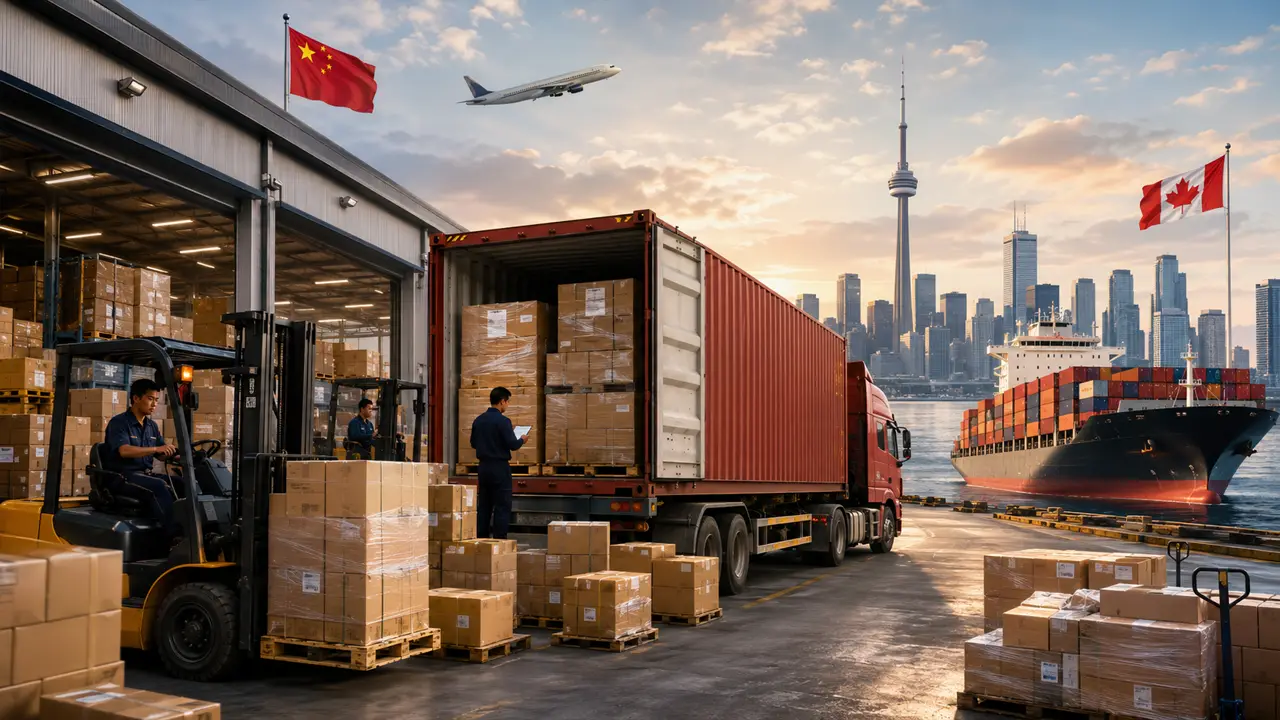
TopShipping supports Canadian importers with supplier coordination, domestic pickup in China, consolidation-facility receiving, cargo data verification, shipment planning, air or sea freight, customs documentation support and final delivery coordination. The service is designed for commercial importers that need better control over multi-supplier orders, shipping costs, documentation and cargo readiness.
What Is Freight Consolidation from China?
Freight consolidation is the process of collecting cargo from multiple suppliers and organizing it into one coordinated shipment or freight plan.
For example, a Canadian importer may purchase packaging from a supplier in Dongguan, finished products from Shenzhen and accessories from Guangzhou. Instead of asking each supplier to arrange a separate international shipment, the goods can be delivered to an agreed consolidation facility in China. The cargo is then received, identified, measured and prepared for the selected air or sea freight service.
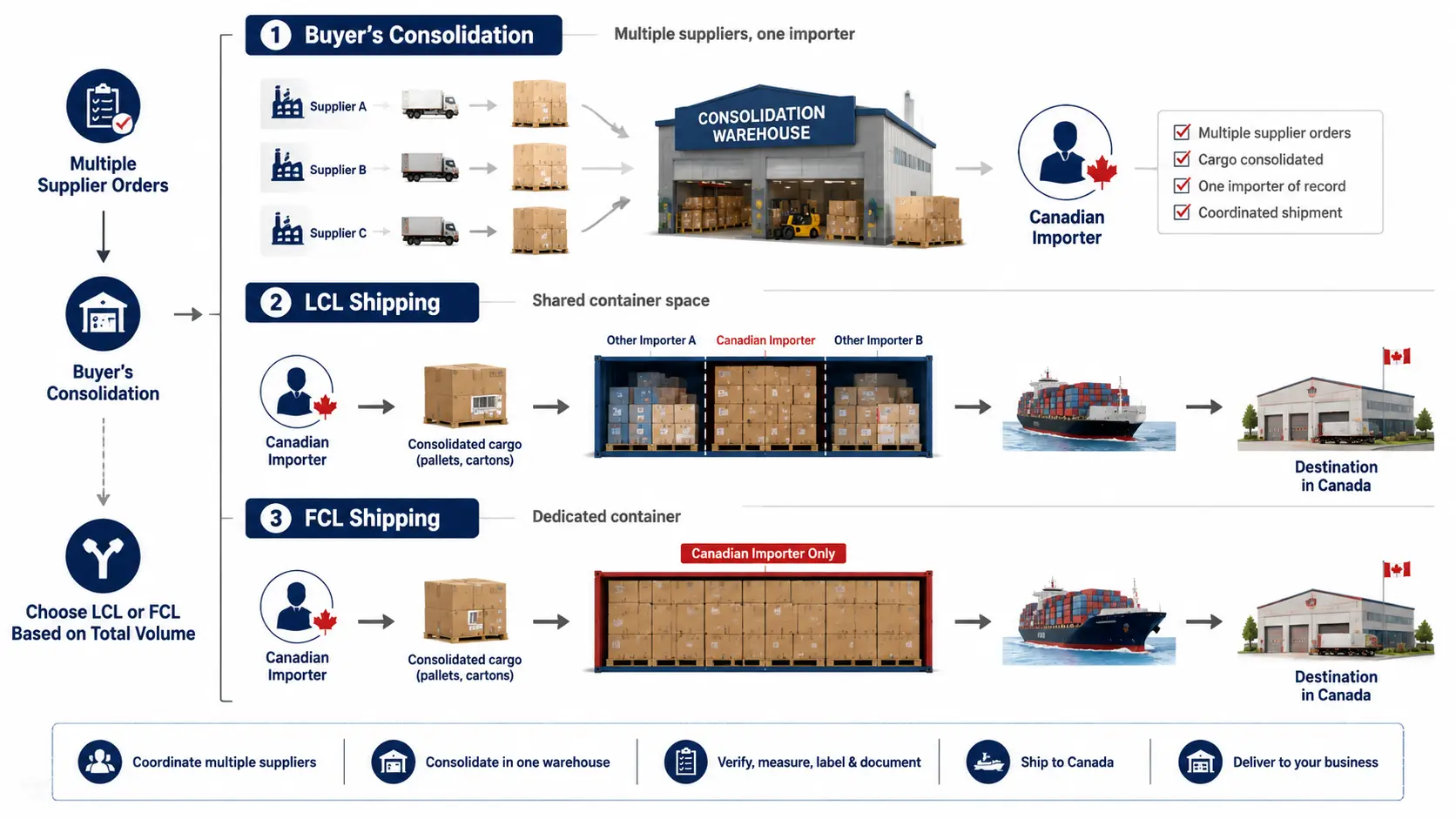
This arrangement is often called buyer’s consolidation because multiple supplier orders are combined for one buyer or consignee.
Buyer’s consolidation should not be confused with standard carrier LCL consolidation. In a conventional LCL shipment, cargo belonging to different shippers and consignees may share container space. In buyer’s consolidation, goods from several suppliers are coordinated specifically for the same importer, purchase program or delivery plan.
Depending on the total volume, urgency and destination, the consolidated cargo may ultimately move by:
- Air freight
- LCL sea freight
- FCL container shipping
- Door-to-door freight
- A combination of air and sea shipments
When Does Multi-Supplier Consolidation Make Sense?
Freight consolidation is particularly useful when a business purchases relatively small or medium-sized orders from several Chinese suppliers.
It may be appropriate when:
- Several suppliers are producing parts of the same product line
- Individual supplier orders are too small for economical international shipping
- Goods need to arrive at one warehouse or commercial destination in Canada
- The importer wants one coordinated freight plan instead of several bookings
- Actual weights and dimensions need to be confirmed before selecting air or sea freight
- Products need to be grouped by SKU, purchase order, destination or urgency
- Commercial invoices and packing information need to be matched before export
- Some inventory is urgent while the remaining cargo can move by sea
- The importer wants to compare LCL and FCL after all supplier cargo is received
Consolidation may not be necessary when one supplier already has enough cargo for a practical factory-loaded container, when every order has a different Canadian destination or when urgent goods would be delayed by waiting for other suppliers.
Businesses that still need assistance identifying manufacturers or coordinating product purchases should review TopShipping’s supplier and product sourcing service. Supplier sourcing and freight consolidation are related services, but they solve different problems: sourcing focuses on finding and evaluating suppliers, while consolidation focuses on organizing cargo after orders have been placed.
What Can a Freight Consolidation Service Include?
The exact service scope should be confirmed in the quotation. Depending on the cargo and shipping plan, TopShipping can coordinate the following stages.
| Service Stage | Typical Scope |
|---|---|
| Supplier coordination | Confirming contact details, cargo-ready dates, pickup requirements and shipment references |
| China pickup | Collecting goods from factories, supplier warehouses or other agreed locations |
| Warehouse receiving | Recording incoming cartons, supplier names and purchase-order references |
| Basic receiving checks | Reviewing carton count, visible outer condition, shipping marks and labels |
| Cargo measurement | Confirming gross weight, carton dimensions and total cubic volume |
| Shipment staging | Holding cargo while additional supplier orders become ready |
| Optional preparation | Repacking, palletizing, relabelling or other agreed services |
| Document coordination | Matching invoices, packing lists, product descriptions and supplier information |
| Freight planning | Comparing air, LCL, FCL, split-shipment and door-delivery options |
| Export preparation | Coordinating shipment records and origin handling before departure |
| Canada-side coordination | Supporting customs clearance, destination handling and final delivery |
A basic warehouse receiving check is not the same as a detailed product inspection or factory quality-control service. Product testing, quantity verification inside sealed cartons, functional inspection, sampling and photographic inspection should be requested and quoted separately when required.
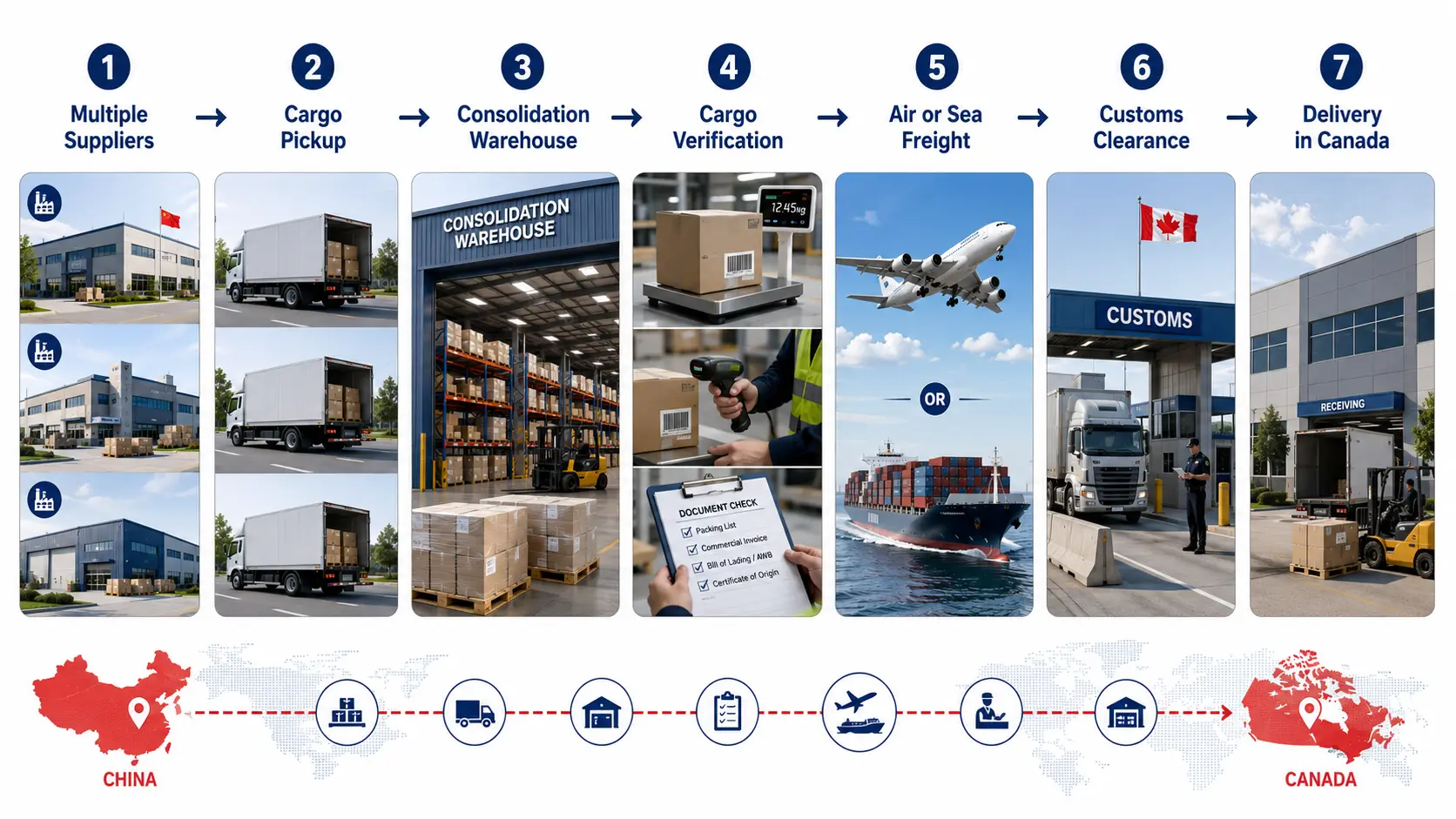
How the Consolidation Process Works
1. Shipment and Supplier Review
The importer provides the supplier list, pickup locations, product descriptions, purchase-order references, expected carton counts and estimated ready dates.
TopShipping reviews whether consolidation is operationally practical and identifies any cargo that may require special handling, separate transportation or additional documentation.
2. Consolidation Instructions
Each supplier receives the necessary delivery or pickup instructions. Cartons should be marked with the importer’s reference, supplier name, purchase order or another agreed identifier so incoming cargo can be matched correctly.
3. Cargo Pickup or Supplier Delivery
Goods are either collected from each supplier or delivered by the supplier to the agreed facility. Pickup costs depend on the supplier locations, cargo size, vehicle requirements and loading conditions.
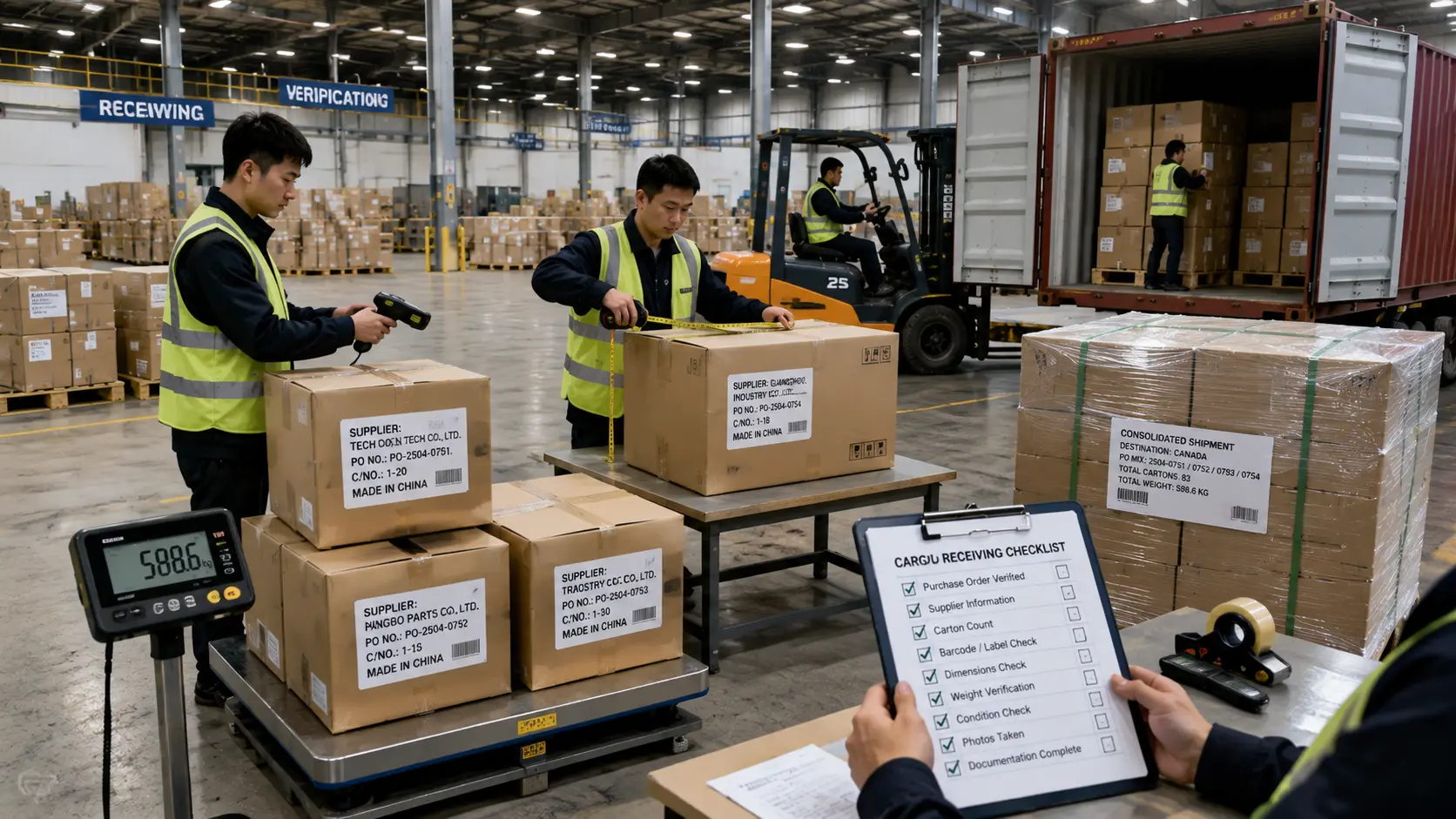
4. Receiving and Cargo Identification
Incoming cartons or pallets are recorded against the supplier and shipment reference. Basic receiving may include checking carton count, visible packaging condition, labels and shipping marks.
Any discrepancy should be reported before the consolidated shipment is booked.
5. Measurement and Data Confirmation
Actual carton dimensions, gross weight and total cubic volume are important because supplier estimates are not always accurate. Confirmed cargo data allows the freight plan to be compared using realistic air-freight chargeable weight, LCL volume or FCL capacity.
6. Document Matching
Commercial invoices, packing lists, product descriptions, values, quantities and supplier references are reviewed for consistency with the physical cargo information.
Document coordination is especially important when several suppliers use different product names, units of measurement, currencies or packing formats.
7. Mode and Route Selection
Once the cargo is ready and measured, the shipment can be planned by air, LCL sea freight, FCL container or a split-shipment strategy.
The right option depends on total volume, cargo density, urgency, handling sensitivity, Canadian destination and landed-cost requirements.
8. Export, International Freight and Delivery
The cargo is prepared for export and moves under the confirmed shipping arrangement. After arrival in Canada, customs clearance, destination handling and delivery are coordinated according to the quotation and Incoterm.
Air, Sea or Split-Shipment Consolidation
Freight consolidation does not require every carton to use the same transportation method. The shipment plan should reflect inventory urgency, cargo characteristics and total landed cost.
Sea Freight Consolidation
Sea freight is generally suitable for planned commercial inventory, heavier cargo, palletized goods and shipments where transportation cost per unit is more important than speed.
Consolidated cargo may move as LCL when the total order does not require a full container. When the combined supplier volume becomes large enough, buyer’s consolidation may also support an FCL shipment dedicated to one importer.
TopShipping’s sea freight service from China to Canada explains the broader ocean transportation process, including LCL, FCL, container planning, routes and destination delivery.
Air Freight Consolidation
Air freight may be used when products from several suppliers need to arrive quickly, when inventory is compact and valuable or when a delayed component would interrupt production or sales.
The actual air-freight chargeable weight should be reviewed after cartons are received and measured. Combining supplier orders can improve coordination, but the final cost still depends on weight, dimensions, cargo type, airport routing and delivery requirements.
For urgent commercial cargo, review air freight from China to Canada.
Split Shipments
A split shipment may be more practical than waiting for every supplier order.
For example:
- Urgent replacement stock can move by air
- Planned inventory can move by sea
- Regulated or sensitive goods can be separated from general cargo
- Amazon or fulfillment inventory can be separated from wholesale inventory
- Goods for different Canadian destinations can use different delivery plans
The goal is not simply to combine the maximum amount of cargo. The goal is to create the most practical shipping plan for the importer’s inventory, cost and delivery requirements.
Buyer’s Consolidation, LCL and FCL
The following terms describe different parts of the shipping process.
| Term | Meaning | Best Used When |
|---|---|---|
| Buyer’s consolidation | Orders from several suppliers are organized for one buyer or consignee | The importer purchases from multiple suppliers |
| Standard LCL | Cargo shares container space with unrelated shipments | The total cargo does not fill a container |
| Buyer’s consolidation by LCL | Several supplier orders for one importer move together as an LCL shipment | Combined volume remains below practical FCL level |
| Buyer’s consolidation by FCL | Multiple supplier orders are assembled into a container dedicated to one importer | Combined cargo justifies a full container |
| Air consolidation | Several supplier orders are combined into one coordinated air-freight plan | Cargo is urgent, compact or time-sensitive |
The final decision should consider origin handling, warehouse charges, total volume, destination fees, handling exposure and delivery requirements—not only the basic ocean rate.
For a detailed comparison of container options, read the LCL versus FCL shipping guide.
Freight Consolidation Costs
Consolidation may reduce repeated international bookings, minimum charges and fragmented supplier pickups. However, it does not automatically reduce the total cost of every shipment.
A proper comparison should include:
- Number and location of suppliers
- China domestic pickup charges
- Warehouse receiving fees
- Cargo handling and measurement
- Storage time
- Repacking or palletization
- Labelling or shipping-mark corrections
- Export handling
- Air-freight chargeable weight
- LCL volume or FCL container requirements
- Customs brokerage and destination handling
- Final delivery location in Canada
- Special cargo or compliance requirements
- Cargo insurance when requested
Waiting for another supplier may also create storage charges or inventory delays. In some cases, shipping an urgent order separately can be more economical than delaying the complete consolidation plan.
For a broader explanation of freight, origin, customs and delivery charges, review the guide to shipping costs from China to Canada.
Freight Consolidation Lead Time
The total lead time begins before the international flight or vessel departure.
It may include:
- Supplier production and cargo readiness
- Pickup from each supplier
- Delivery to the consolidation facility
- Waiting for remaining supplier orders
- Receiving, measuring and document review
- Repacking or shipment preparation when required
- Export handling and carrier booking
- International air or sea transportation
- Canadian customs clearance
- Final delivery
The slowest supplier can affect the complete shipment if all goods must move together. Importers should establish a consolidation cut-off date and decide in advance whether late cargo will wait for the next shipment or move separately.
Air freight is normally selected for faster inventory movement, while sea freight is generally used for planned, larger or more cost-sensitive orders. Actual schedules must be confirmed when the cargo is ready and the booking is made.
The China to Canada shipping time guide provides broader planning information for air, LCL, FCL and door-to-door shipments.
Documents for Consolidated Shipments
Multi-supplier consolidation requires accurate and traceable documentation.
Depending on the shipment, the document package may include:
- Commercial invoice from each seller or supplier
- Packing list from each supplier
- Consolidated packing summary
- Purchase-order references
- Product descriptions and materials
- Quantity and unit information
- Declared values and currencies
- Country-of-origin information
- HS classification information
- Carton count, gross weight and dimensions
- Supplier, buyer and consignee details
- Bill of lading or air waybill
- Permits, certificates or test reports where required
A consolidated packing summary should not erase or replace the underlying commercial transactions. Each supplier’s products, values and quantities should remain traceable so that the shipping and customs records accurately represent the imported goods.
The Canada Border Services Agency requires commercial invoice information that identifies the buyer and seller, the price paid or payable and an accurate description and quantity of the goods. Importers should review the official CBSA invoice requirements when preparing commercial shipment records.
TopShipping’s shipping documents checklist explains the broader documentation requirements for commercial imports.
Canadian Customs and Importer Requirements
Combining several supplier orders into one freight movement does not remove Canadian import requirements. The importer must still ensure the products are admissible, properly described, classified, valued and supported by any required permits or certificates.
Canadian commercial importers should confirm their Business Number, RM import-export account, CARM registration, customs-broker authorization and Release Prior to Payment arrangements where applicable.
Current account and commercial-import information should be verified through the official CBSA CARM guidance.
TopShipping can coordinate freight and customs-related shipment information, but the importer remains responsible for providing accurate product, value, origin and business information. Review the customs clearance service from China to Canada for a more detailed explanation of Canadian clearance support.
Cargo Compatibility and Special Requirements
Not every product should be combined into the same shipment.
Cargo may need separate review when it includes:
- Lithium batteries or battery-powered products
- Liquids, powders, chemicals or aerosols
- Dangerous goods
- Food, supplements or agricultural products
- Cosmetics or health-related products
- Medical devices
- Magnets or pressurized goods
- Temperature-sensitive cargo
- High-value or theft-sensitive goods
- Oversized or heavy cargo
- Products requiring import permits or certifications
Cargo compatibility should be reviewed before goods are delivered to the consolidation facility. Mixing general cargo with restricted, dangerous or highly sensitive products can change the transportation method, documentation, packaging and cost.
Wooden pallets, crates, dunnage and bracing may also be subject to Canadian phytosanitary requirements. Importers using solid wood packaging should review the official CFIA wood packaging requirements and confirm appropriate ISPM 15 treatment and marking where required.
Common Consolidation Risks
| Risk | Potential Result | Recommended Control |
|---|---|---|
| Different supplier ready dates | Storage or shipment delay | Set a cargo cut-off date |
| Unmarked cartons | Cargo identification errors | Use PO and supplier references |
| Incorrect dimensions or weight | Inaccurate freight quotation | Measure cargo after receiving |
| Inconsistent invoices and packing lists | Customs or documentation delay | Match documents before booking |
| Damaged outer packaging | Handling or cargo-loss exposure | Report condition and arrange repacking if approved |
| Mixing restricted and general cargo | Booking rejection or compliance issues | Review products before consolidation |
| Waiting too long for one supplier | Inventory delay and storage charges | Consider split shipping |
| Assuming receiving equals inspection | Undetected product-quality issues | Order separate QC when required |
| Unclear delivery requirements | Unexpected final-mile charges | Confirm dock, appointment and unloading needs |
When several supplier orders are combined, calculate each cargo group separately and then confirm the combined shipment volume in CBM.
Why Choose TopShipping for Freight Consolidation?
TopShipping helps Canadian businesses coordinate the operational steps between multiple Chinese suppliers and one Canadian import plan.
Our consolidation support can provide:
- One coordination point for multiple suppliers
- China-side pickup and cargo receiving arrangements
- Clear supplier and purchase-order references
- Actual weight and volume confirmation
- Air, LCL, FCL and split-shipment planning
- Commercial document coordination
- Customs clearance support
- Door-to-door delivery planning
- Freight options aligned with inventory priorities
- A practical quotation based on the complete service scope
The objective is not to combine cargo at any cost. It is to determine which goods should move together, which goods should move separately and which transportation method provides the best operational fit.
Information Needed for a Consolidation Quote
To prepare an accurate freight consolidation plan, provide:
- Number of suppliers
- Supplier names and contact information
- Pickup addresses or cities in China
- Cargo-ready date for each supplier
- Product names and descriptions
- Product materials and intended use
- Purchase-order references
- Carton or pallet count
- Dimensions and gross weight
- Commercial invoice value
- HS codes if available
- Packaging type
- Special cargo information
- Preferred air or sea method if known
- Required delivery timeline
- Final Canadian postal code and address type
- Customs clearance requirements
- Final delivery and unloading requirements
- Any labelling, repacking, storage or inspection needs
Exact information may not be available at the beginning. Initial estimates can be reviewed first and updated after cargo is received and measured.
Request a Freight Consolidation Quote
Buying from several Chinese suppliers does not have to create several disconnected shipping processes.
Send TopShipping your supplier list, cargo information, expected ready dates and Canadian delivery requirements. Our freight team will review whether your goods should move by air, LCL, FCL, door-to-door freight or a split-shipment plan.