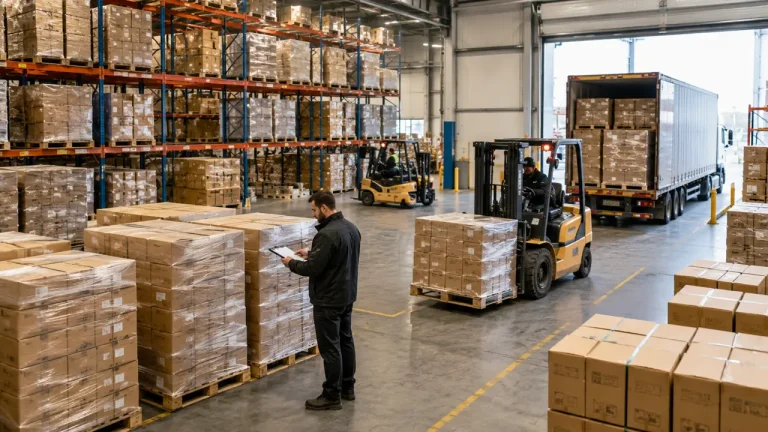
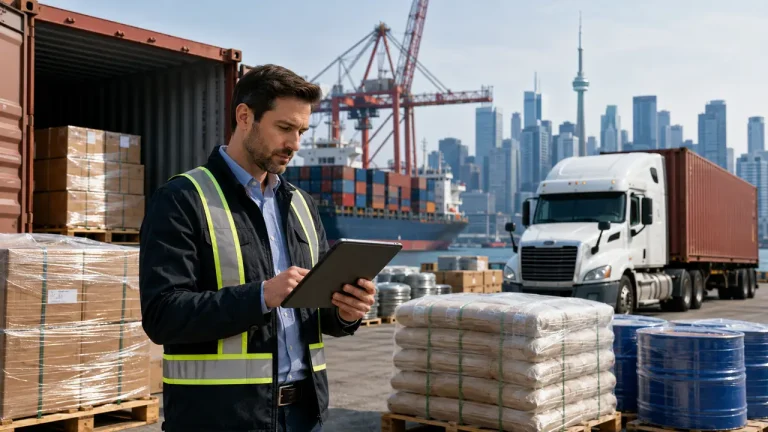
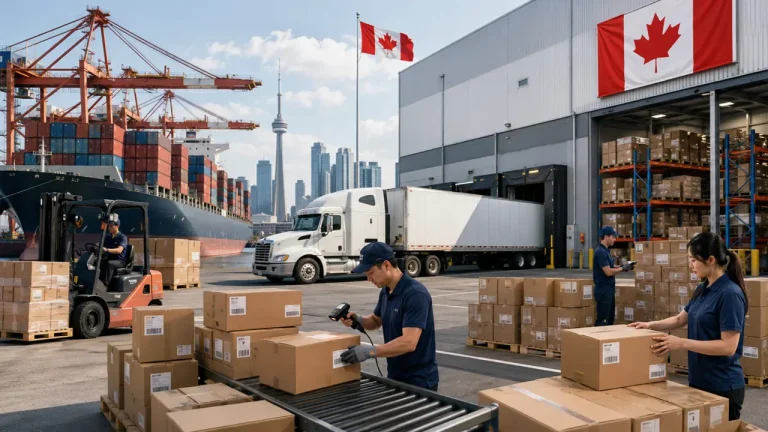
Sea freight from China to Canada provides a cost-effective solution for importing commercial goods, wholesale inventory, palletized cargo and larger shipments from Chinese suppliers.
TopShipping manages ocean freight shipments from major manufacturing regions and ports in China to destinations across Canada. Depending on your cargo volume, weight, supplier location and delivery requirements, goods can be shipped by LCL, FCL or door-to-door sea freight.
Listen to a brief overview of LCL, FCL, transit times, pricing methods and door-to-door sea freight from China to Canada.
More Info Sea Freight from China to Canada
Table of Contents
Sea freight from China to Canada is a cost-effective solution for businesses importing wholesale goods, bulk cargo, recurring inventory and larger commercial shipments from Chinese suppliers. Our ocean freight service can include supplier pickup, cargo consolidation, export handling, LCL or FCL shipping, customs clearance support and final delivery to warehouses, commercial addresses, 3PL facilities and fulfillment centres across Canada.
Whether you are shipping a few cubic metres by LCL or booking a complete 20ft or 40ft container, the right option depends on cargo volume, gross weight, product density, transit requirements and total landed cost. For shipments that are too large or heavy for economical air transport, sea shipping generally provides a lower cost per unit.
What Our Sea Freight Service Includes
Our sea freight service from China to Canada can cover the complete shipping process, from coordinating cargo with suppliers in China to customs support and inland delivery at the final Canadian destination.
Pickup and Cargo Consolidation
We coordinate supplier pickup and combine multiple orders into one shipment when required.
LCL and FCL Ocean Freight
We compare cargo volume, weight and route requirements to select a practical LCL or container option.
Documents and Customs Support
We coordinate export documents and support the customs clearance process in Canada.
Delivery Across Canada
Released cargo can be delivered to warehouses, businesses, 3PLs and fulfillment centres.
When Is Sea Freight the Right Choice?
Sea freight is generally the most practical option when shipment volume, cargo weight and total landed cost are more important than the fastest possible delivery.
You are importing commercial goods, wholesale inventory or bulk cargo.
Your shipment is too large or heavy for cost-effective air freight.
You can plan inventory around a longer and less predictable transit time.
You need to ship pallets, machinery, cartons or containerized goods.
You regularly source products from one or multiple suppliers in China.
For smaller urgent shipments, air freight from China to Canada may be more suitable. For larger or recurring shipments, ocean freight usually provides a lower transportation cost per unit.
LCL vs FCL Shipping from China to Canada
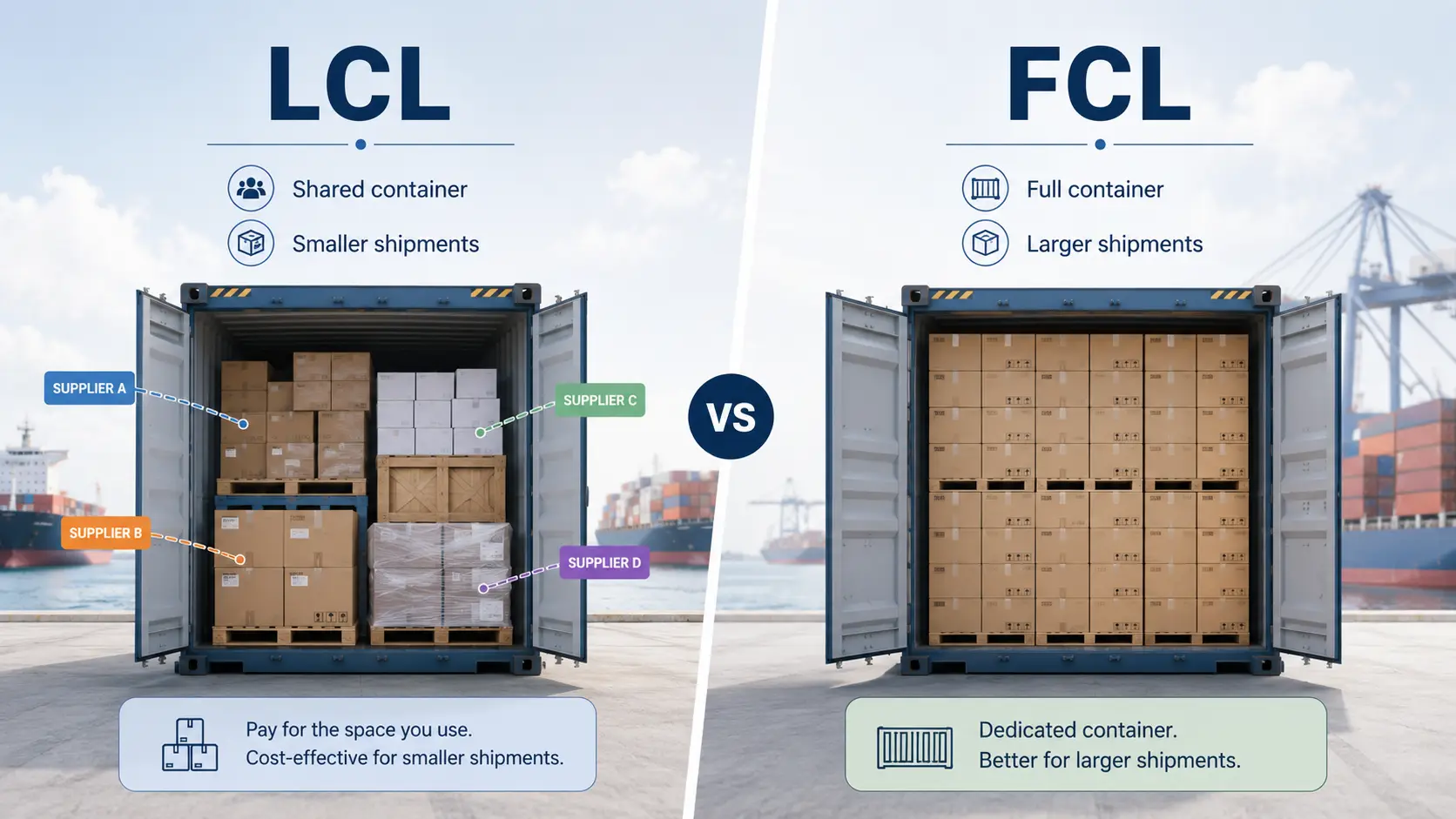
Sea freight shipments can move as LCL or FCL. The right option depends on cargo volume, weight, shipment frequency, handling sensitivity and total destination charges.
Shipping Option
Best For
Pricing Method
Key Consideration
LCL Shipping
Smaller shipments that do not fill a container
Charged by W/M, based on CBM or metric tons
More handling and consolidation time may be required
20ft FCL
Heavy cargo or medium-volume commercial shipments
Charged per full container
Often suitable when cargo density is high
40ft FCL
Large-volume and recurring shipments
Charged per full container
Provides more space and a lower cost per cubic metre
40ft High Cube
Bulky but relatively lightweight cargo
Charged per full container
Offers additional internal height and loading capacity
LCL shipping is generally suitable when your cargo occupies only a few cubic metres and booking a complete container would leave substantial unused space. It is commonly used for cartons, pallets, samples, replacement inventory and consolidated orders from multiple suppliers.
When Should You Choose FCL?
FCL shipping is usually more practical for larger, heavier or recurring shipments. The complete container is assigned to one shipment, which reduces cargo handling and can provide better cost efficiency at higher volumes.
As a general market guideline, FCL may become more economical when cargo reaches approximately 13 to 18 CBM. The actual crossover point depends on origin charges, destination handling, cargo weight, route and current carrier rates.
Sea Freight Container Sizes and Capacity
For FCL shipping from China to Canada, the most common options are 20ft, 40ft and 40ft High Cube containers. The right size depends on cargo volume, gross weight, packaging dimensions and loading efficiency.
Container Type
Approx. Internal Dimensions
Nominal Capacity
Typical Planning Volume
Approx. Maximum Payload
Best Suited For
20ft Standard
5.90 × 2.35 × 2.39 m
33 CBM
About 25–28 CBM
Up to 28,200 kg
Heavy cargo, machinery, dense products and smaller FCL shipments
40ft Standard
12.03 × 2.35 × 2.39 m
67 CBM
About 55–60 CBM
Up to 28,800 kg
Higher-volume cartons, pallets and regular commercial inventory
40ft High Cube
12.03 × 2.35 × 2.70 m
About 76 CBM
About 65–70 CBM
Up to 28,600 kg
Bulky, lightweight goods that require additional vertical space
Nominal container capacity does not equal the actual loadable cargo volume. Carton dimensions, pallets, wooden packaging, loading patterns and unused spaces can reduce the usable capacity.
A 20ft container is often preferred for dense or heavy cargo, while a 40ft High Cube provides better volume efficiency for products such as furniture, textiles, household goods and other bulky inventory.
The maximum technical payload should not be treated as the permitted cargo weight for every shipment. Road weight restrictions, container tare weight, axle limits and inland transport regulations must also be checked before loading.
Sea Freight Transit Time from China to Canada
Sea freight from China to Canada generally takes between 20 and 45 days, depending on the origin port, Canadian destination, sailing schedule, transshipment requirements and inland delivery route.
Shipments arriving at Vancouver or Prince Rupert usually have a shorter ocean transit than cargo routed to Eastern Canada. Deliveries to Toronto, Montreal and other inland destinations also require additional rail or truck transportation after the container arrives in Canada.
Shipping Route
Port or Terminal Transit
Door-to-Door Time
Typical Routing
Shanghai or Ningbo to Vancouver
16–28 days
25–40 days
Direct or transshipment ocean service followed by local delivery
Shenzhen or Yantian to Vancouver
18–30 days
28–42 days
South China departure with direct or connecting service
Major China ports to Prince Rupert
15–26 days
24–40 days
West Coast arrival followed by rail or truck delivery
China to Toronto
25–40 days
32–48 days
Ocean freight to Western Canada followed by intermodal rail
China to Montreal
30–45 days
38–55 days
West Coast and rail routing or an East Coast ocean service
China to other Canadian cities
Route dependent
30–55 days
Ocean freight combined with rail and final-mile trucking
These transit times are planning ranges rather than guaranteed delivery schedules. The confirmed sailing date, vessel route and expected arrival should be checked when the shipment is booked.
Port-to-Port vs Door-to-Door Transit Time
Port-to-port transit only covers the ocean movement between the departure and arrival ports. It does not include supplier pickup, export handling, consolidation, customs clearance, container availability, rail transportation or final delivery in Canada.
Shipping Stage
Typical Planning Time
Supplier pickup and origin handling
2–5 days
Export documentation and container loading
2–5 days
Ocean transportation
16–40 days
Arrival handling and customs clearance
2–7 days
Rail or truck delivery within Canada
2–10 days
Does LCL Take Longer Than FCL?
LCL shipments can take longer because cargo must be received, consolidated and loaded with goods from other shippers before departure. After arrival, the container must also be moved to a warehouse and deconsolidated before individual shipments can be released.
FCL cargo normally requires less handling because the complete container is assigned to one shipment. However, the actual delivery time still depends on vessel schedules, port operations, customs release and inland transportation availability.
What Can Delay Sea Freight?
Limited vessel space or a rolled booking
Transshipment and missed vessel connections
Peak-season congestion at Chinese or Canadian ports
Incorrect commercial invoices, packing lists or HS codes
Customs inspections or additional document requests
Rail congestion and equipment shortages in Canada
Weather conditions, labour disruptions and carrier schedule changes
Sea freight cost from China to Canada depends on the shipping method, cargo volume, gross weight, origin port, Canadian destination, container availability and current carrier rates.
LCL shipments are normally charged by weight or measurement, while FCL rates are quoted per container. The figures below are market references in USD for July 2026 and should not be treated as fixed quotations.
Current Sea Freight Rate Guide
Shipping Option
Market Reference
Pricing Basis
Suitable Cargo
LCL Sea Freight
From USD 180 per W/M
Per CBM or metric ton, whichever is greater
Smaller shipments that do not require a full container
20ft FCL Container
USD 7,500–9,300
Per container
Dense, heavy or medium-volume commercial cargo
40ft or 40HC Container
USD 9,400–11,500
Per container
Large-volume, bulky or recurring shipments
These ranges mainly represent the international freight portion. Supplier pickup, export handling, customs clearance, duties, taxes, destination charges and final delivery may be quoted separately.
Need a Sea Freight Cost Estimate?
Send us your cargo volume, weight, pickup city and Canadian destination to receive an LCL or FCL shipping estimate.
LCL shipping is calculated using weight or measurement, commonly shown as W/M. One cubic metre is compared with one metric ton, and the shipment is charged using whichever figure is greater.
A shipment measuring 1 CBM and weighing 250 kg is charged as 1 W/M.
A shipment measuring 3 CBM and weighing 1,000 kg is charged as 3 W/M.
A shipment measuring 1 CBM and weighing 1,500 kg is charged as 1.5 W/M.
Cargo Volume
Gross Weight
Chargeable W/M
Base Ocean Freight
Equivalent Cost per kg
1 CBM
100 kg
1 W/M
USD 180
USD 1.80/kg
1 CBM
250 kg
1 W/M
USD 180
USD 0.72/kg
1 CBM
500 kg
1 W/M
USD 180
USD 0.36/kg
1 CBM
1,000 kg
1 W/M
USD 180
USD 0.18/kg
1 CBM
1,500 kg
1.5 W/M
USD 270
USD 0.18/kg
The equivalent cost per kilogram is shown only to help importers compare shipment sizes. Unlike air freight, sea freight is not normally sold at a simple fixed rate per kilogram.
Additional Sea Freight Charges
Cost Component
Usually Included in Base Ocean Rate?
What It Covers
Supplier Pickup
No
Transport from the supplier or factory to the port or consolidation warehouse
Origin Handling
Not always
Export handling, documentation, loading and CFS services
Ocean Freight
Yes
International transport between the origin and destination ports
Destination Handling
Not always
Terminal, deconsolidation and container processing charges in Canada
Customs Clearance
No
Customs brokerage, declarations and release processing
Duties and Taxes
No
Government charges based on product classification, value and origin
Final Delivery
No
Rail or truck delivery from the port or warehouse to the final destination
For a detailed explanation of freight charges, customs costs and landed-cost factors, read our shipping cost from China to Canada guide.
To receive an accurate sea freight quote, provide the pickup city, Canadian delivery address, number of packages, dimensions, gross weight, cargo description and preferred Incoterm.
Door-to-Door Sea Freight from China to Canada
Door-to-door sea freight combines ocean transportation with the supporting services required to move cargo from a supplier in China to a commercial destination in Canada.
Depending on the agreed shipping scope, the service can include supplier pickup, export handling, LCL consolidation or container loading, ocean freight, customs clearance support and final delivery by rail or truck.
Door-to-door shipping can be arranged for LCL and FCL cargo, including delivery to warehouses, businesses, distributors, 3PL facilities and fulfillment centres across Canada.
The Incoterm used for the purchase determines which costs and responsibilities are handled by the supplier, buyer and freight forwarder.
Incoterm
Supplier Responsibility
Buyer Responsibility
Common Use
EXW
Makes the goods available at the factory or warehouse
Pickup, export handling, freight, customs and delivery
Importers who want control from the supplier location
FOB
Delivers and clears the goods for export at the named Chinese port
Ocean freight, Canadian import clearance and final delivery
One of the most common terms for containerized imports
DAP
Arranges transport to the named destination
Import clearance, duties, taxes and unloading
Delivered shipments where the buyer remains responsible for import charges
DDP
Arranges transport and import-related delivery obligations
Usually receives the goods at the agreed destination
Importers seeking a more inclusive shipping arrangement
FOB is often suitable when the supplier can manage Chinese export procedures and deliver the cargo to the departure port. EXW provides the buyer with greater control but requires pickup and export coordination from the supplier location.
DDP may simplify cost planning, but its availability depends on the product, shipment value, importer structure, customs requirements and destination. Duties and taxes should be clearly identified in the quotation rather than assumed to be included.
Sea freight can be arranged from major manufacturing regions and container ports across China. The most suitable routing depends on the supplier location, cargo-ready date, container availability, Canadian destination and carrier schedule.
China Origin
Common Supplier Regions
Typical Canadian Routing
Planning Notes
Shenzhen / Yantian
Shenzhen, Dongguan, Guangzhou and the Pearl River Delta
Vancouver or Prince Rupert, followed by rail or truck delivery
Common for electronics, machinery, consumer goods and e-commerce inventory
Shanghai
Shanghai, Suzhou, Kunshan and nearby manufacturing zones
Vancouver, Prince Rupert or connecting services to Eastern Canada
Suitable for a wide range of containerized commercial cargo
Ningbo
Ningbo, Yiwu, Hangzhou and Zhejiang Province
West Coast Canada with inland rail or truck transportation
Frequently used for wholesale goods, textiles, hardware and consolidated cargo
Qingdao
Shandong and Northern China manufacturing regions
Vancouver, Prince Rupert or transshipment routing
Common for machinery, industrial goods, tires and heavier cargo
Tianjin / Xingang
Beijing, Tianjin, Hebei and surrounding northern regions
West Coast arrival or connecting ocean service
Often used for industrial, automotive and manufacturing cargo
Xiamen
Fujian and Southeast China
Vancouver or transshipment service to another Canadian gateway
Suitable for footwear, stone products, garments and general cargo
Canadian Ports and Inland Destinations
Canadian Destination
Role in the Shipping Route
Typical Final Movement
Vancouver
Major West Coast gateway for containerized cargo arriving from Asia
Local truck delivery or inland rail transportation
Prince Rupert
West Coast container gateway with direct intermodal rail connections
Rail movement to Central Canada or truck delivery within the region
Toronto and the GTA
Major inland commercial and distribution destination
Rail from a Canadian port followed by local drayage or truck delivery
Montreal
Eastern Canadian port and inland distribution market
Direct port delivery, rail or regional trucking depending on routing
Calgary and Edmonton
Important Western Canada inland destinations
Rail or truck transportation from Vancouver or Prince Rupert
Halifax
East Coast gateway used for selected ocean services
Regional delivery or inland rail transportation
The nearest Chinese port is not always the lowest-cost option. Inland pickup charges, sailing frequency, carrier space, transshipment risk and destination handling costs should be compared before selecting the final route.
For deliveries to Toronto, Markham, Montreal, Calgary or other inland cities, the sea freight booking must also account for rail transportation, terminal handling and final-mile trucking after the container arrives in Canada.
Customs Clearance for Sea Freight to Canada
Every commercial sea freight shipment from China must be released by Canadian customs before final delivery. Accurate documents, clear product descriptions and correct importer information help reduce clearance delays, inspections and additional storage charges.
Acts as the main ocean transport document for the shipment
HS Code
Customs classification assigned to each product
Used to determine duty rates, taxes and regulatory requirements
Importer Information
Legal business name, address, Business Number and import account details
Identifies the importer responsible for the commercial entry
Certificates or Permits
Product-specific licences, test reports, certificates or government approvals
Required when goods are regulated or subject to additional import controls
Importer Setup and CARM
Canadian commercial importers generally need a Business Number and an import/export account. Duties, taxes and commercial import accounts are managed through the CBSA Assessment and Revenue Management system, commonly known as CARM.
The importer should confirm account registration, customs broker authorization and payment arrangements before the shipment arrives. Missing importer details or incomplete broker authorization can delay cargo release and create terminal or storage charges.
Duties, Taxes and Product Classification
Import duties and taxes depend on the HS code, declared customs value, country of origin and applicable Canadian tariff treatment. Similar-looking products can have different classifications, so generic descriptions such as “parts,” “accessories” or “samples” should be avoided on commercial documents.
Regulated goods may require additional review before booking. Food, cosmetics, medical products, batteries, chemicals, wood products and other controlled cargo should be checked for permits, labelling rules and agency requirements before export from China.
Sea freight is suitable for many types of commercial cargo, especially larger, heavier or recurring shipments that do not require urgent delivery. The final shipping method depends on cargo dimensions, weight, packaging, product classification and regulatory requirements.
Cargo Category
Examples
Shipping Considerations
General Commercial Goods
Clothing, footwear, household products, packaging materials and retail inventory
Usually suitable for LCL or FCL when properly packed and documented
Machinery and Industrial Cargo
Equipment, spare parts, tools, production components and metal products
Weight distribution, lifting points and export packaging must be checked
Furniture and Bulky Products
Furniture, cabinets, mattresses, display units and home products
40ft High Cube containers may provide better volume efficiency
Palletized and Wholesale Cargo
Cartons, wholesale inventory, distributor orders and consolidated purchases
Pallet dimensions and loading patterns affect usable container capacity
E-commerce and Fulfillment Inventory
Retail stock, private-label products and goods for 3PL or fulfillment centres
Carton labels, SKU details and delivery appointments may be required
Oversized or Heavy Cargo
Large machinery, industrial equipment and non-standard cargo
May require flat rack, open-top, special loading or project cargo planning
Cargo That Requires Additional Review
Some products can move by sea freight but require confirmation before booking because of carrier rules, dangerous goods classifications or Canadian import regulations.
Lithium batteries, power banks and battery-powered products
Liquids, powders, chemicals, adhesives and cleaning products
Cosmetics, food products, supplements and medical goods
Products containing wood or using solid-wood packaging
Magnetic goods, pressurized containers and temperature-sensitive cargo
Branded products that may require proof of authorization
For these shipments, safety data sheets, test reports, dangerous goods declarations, certificates, permits or specific packaging may be required before cargo is accepted.
Restricted or Prohibited Cargo
Cargo acceptance depends on the product, carrier, route and applicable regulations. Illegal goods, undeclared dangerous cargo, counterfeit products and shipments without the required permits or documentation cannot be accepted.
Product details should be reviewed before pickup or container loading. Provide the product name, intended use, material composition, HS code, packaging type and any battery, liquid, powder or chemical content when requesting a quote.
Sea Freight vs Air Freight from China to Canada
Sea freight is usually the better option for larger, heavier and less urgent shipments, while air freight is more suitable when delivery speed, inventory continuity or product value is more important than the lowest transportation cost.
Comparison Factor
Sea Freight
Air Freight
Best For
Bulk cargo, pallets, machinery and larger commercial shipments
Urgent, lightweight, high-value or time-sensitive goods
Typical Transit Time
20–45 days, depending on the route and delivery scope
3–10 days, depending on the service and airport routing
Pricing Basis
Per CBM, W/M or full container
Per chargeable kilogram
Cost Efficiency
Usually lower for higher volumes and heavier cargo
Usually higher, especially for dense or bulky shipments
Cargo Capacity
Suitable for LCL, full containers and oversized cargo
Limited by aircraft capacity, dimensions and dangerous goods rules
Handling
LCL may involve consolidation and deconsolidation
Generally fewer handling stages and faster terminal processing
Inventory Planning
Requires earlier ordering and longer lead-time planning
Useful for urgent restocking and avoiding stock shortages
When Sea Freight Is the Better Option
Choose sea freight when cargo volume is high, the shipment is not urgent and reducing the transportation cost per unit is a priority. It is generally more practical for wholesale inventory, machinery, furniture, pallets and recurring commercial imports.
When Air Freight Is the Better Option
Choose air freight when goods are urgent, compact, valuable or required to prevent a production or inventory delay. Air shipping may also be useful for product launches, replacement parts, samples and smaller restocking orders.
Some importers use both methods together. Core inventory moves by sea freight, while urgent or high-demand products are shipped by air to maintain stock availability.
Each shipment follows a coordinated process from cargo preparation in China to customs release and delivery in Canada.
Shipment Review
We review the cargo type, dimensions, weight, supplier location, Incoterm and Canadian destination.
Pickup or Supplier Delivery
Cargo is collected from the supplier or delivered to the designated warehouse, CFS or container loading location.
Consolidation and Export Preparation
LCL cargo is combined with other shipments, while FCL cargo is loaded into a dedicated container. Export documents are checked before departure.
Ocean Transportation
The shipment moves from the selected Chinese port to a Canadian gateway based on the confirmed vessel schedule and routing.
Customs Clearance in Canada
Shipping documents are submitted for customs processing, and any duties, taxes or inspection requirements are addressed before release.
Final Delivery
Released cargo is transported by truck or rail to the warehouse, business address, 3PL or fulfillment centre.
When goods are purchased from multiple factories, our cargo consolidation in China service can combine them into one coordinated sea freight shipment.
Information Needed for a Sea Freight Quote
Accurate shipment details help us compare LCL, FCL and door-to-door options and calculate a more reliable freight estimate.
Required Information
Details to Provide
Pickup Location
Supplier city, factory address or nearest Chinese port
Delivery Destination
Canadian city, postal code and type of delivery location
Cargo Description
Product name, material, intended use and HS code if available
Package Details
Number of cartons, pallets, crates or other shipping units
Dimensions and Weight
Length, width, height and gross weight of each package
Shipping Terms
EXW, FOB, DAP, DDP or another agreed Incoterm
Cargo Ready Date
The date when goods will be packed and available for pickup
Special Cargo Details
Battery, liquid, powder, chemical, wood packaging or oversized cargo information
For multiple suppliers, provide the location and shipment details for each order so we can evaluate consolidation before export.
Incomplete dimensions, estimated weights or unclear product descriptions can change the final LCL charge, container selection and customs requirements.
Ready to Ship from China to Canada?
Share your shipment details and we will compare LCL, FCL and door-to-door sea freight options for your cargo.
How long does sea freight from China to Canada take?
Sea freight usually takes 20–45 days, depending on the Chinese port, Canadian destination, carrier schedule, transshipment and inland delivery. Door-to-door shipments may take longer than port-to-port transport.
How much does sea freight from China to Canada cost?
The cost depends on cargo volume, weight, route, container type, Incoterm and delivery scope. LCL is charged by W/M, while FCL is quoted per 20ft, 40ft or 40ft High Cube container.
Is sea freight charged per kilogram?
Not usually. LCL sea freight is calculated by weight or measurement. One CBM is compared with one metric ton, and the greater value becomes the chargeable W/M. A per-kilogram figure is only useful as an equivalent cost comparison.
What is the difference between LCL and FCL shipping?
LCL shares container space with other shipments and is suitable for smaller volumes. FCL reserves the complete container for one shipment and is generally more practical for larger, heavier or recurring cargo.
When does FCL become cheaper than LCL?
FCL may become more economical when cargo reaches roughly 13–18 CBM. The actual crossover point depends on cargo weight, origin charges, destination handling and current container rates.
Which container size should I choose?
A 20ft container is often suitable for dense and heavy cargo. A 40ft or 40ft High Cube container is generally better for larger-volume or bulky goods. Final selection should be based on actual carton dimensions and loading efficiency.
Can you collect goods from multiple suppliers in China?
Yes. Goods from multiple suppliers can be collected, received at a consolidation warehouse and combined into one LCL or FCL shipment before export.
Can sea freight be delivered door to door in Canada?
Yes. Door-to-door sea freight can include supplier pickup, export handling, ocean transportation, customs clearance support and delivery to a warehouse, business, 3PL or fulfillment centre in Canada.
What documents are required for sea freight to Canada?
Common documents include the commercial invoice, packing list, bill of lading, HS codes and importer information. Regulated products may also require permits, certificates, test reports or dangerous goods documents.
Are customs duties and taxes included in the sea freight rate?
Not automatically. Base ocean freight usually excludes customs duties, taxes, brokerage, destination handling and final delivery unless these items are specifically included in the quotation.
What goods are suitable for sea freight?
Sea freight is suitable for wholesale inventory, machinery, furniture, palletized goods, industrial products, retail stock and other commercial cargo. Batteries, liquids, chemicals, food and regulated products require additional review before booking.
What information is needed for a sea freight quote?
Provide the supplier city, Canadian destination, cargo description, number of packages, dimensions, gross weight, Incoterm and cargo-ready date. Mention any batteries, liquids, powders, chemicals, wood packaging or oversized items.
Ready to ship from China to Canada?
Get a practical freight solution for your cargo, timeline, and delivery needs.