Choosing between DDP and DAP shipping to Canada affects much more than who receives the freight invoice. The selected Incoterm determines who arranges import customs clearance, who pays Canadian duties and GST, who must be ready to act as the importer of record, and how transportation risk is allocated up to the named delivery point.
Under both DDP and DAP, the seller normally arranges transportation to an agreed destination in Canada. The critical difference is the import side. With DAP, the Canadian buyer generally handles import clearance and pays duties and taxes. With DDP, the seller assumes responsibility for import formalities and delivers the goods under a duty-paid structure.
For Canadian importers buying commercial goods from China, the correct choice depends on importer readiness, product classification, GST treatment, customs compliance, shipment value and the seller’s ability to complete Canadian import formalities legally. This guide explains the practical difference between DDP and DAP and how each term affects the total landed cost of shipping from China to Canada.
DDP vs DAP Shipping to Canada at a Glance
| Comparison Point | DAP Shipping to Canada | DDP Shipping to Canada |
|---|---|---|
| Full term | Delivered at Place | Delivered Duty Paid |
| Main transport to Canada | Arranged and paid by the seller | Arranged and paid by the seller |
| Export clearance | Seller | Seller |
| Import customs clearance | Buyer or Canadian importer | Seller under the agreed DDP structure |
| Customs duties and import taxes | Normally paid by the buyer/importer | Normally included and paid by the seller |
| Importer of record | Usually the Canadian buyer or another appointed Canadian importer | Must be established before shipment; may require a compliant non-resident importer or other approved structure |
| Risk transfer | At the named place in Canada when goods are ready for unloading | At the named place in Canada when goods are ready for unloading |
| Unloading at destination | Normally the buyer’s responsibility | Normally the buyer’s responsibility |
| Cost visibility for buyer | More control, but duties, GST and customs charges are separate | Simpler headline price when the scope is genuinely all-inclusive |
| Best suited for | Established Canadian importers with customs and tax infrastructure | Buyers seeking duty-paid delivery when the seller can legally and transparently manage the import |
What Is DAP Shipping to Canada?
DAP means Delivered at Place under Incoterms 2020. The seller arranges and pays for transportation to a precisely named destination in Canada and carries the transportation risk until the goods are placed at the buyer’s disposal, ready for unloading from the arriving vehicle.
The buyer is responsible for import customs formalities. This normally includes appointing a customs broker where required, providing importer information, arranging customs release, paying duties and GST, obtaining product permits and resolving any import-compliance issues.
A correctly written DAP term should identify the exact delivery point rather than only naming the country or city. For example:
DAP 1250 Example Road, Mississauga, Ontario, Canada, Incoterms 2020
This wording is more useful than “DAP Canada” because freight costs and risk can change significantly depending on whether the named place is a port terminal, airport warehouse, rail ramp, distribution centre or the buyer’s final warehouse.
Seller Responsibilities Under DAP
- Prepare the commercial goods and sales documents
- Complete export clearance in the country of origin
- Arrange pickup and origin handling where included
- Book and pay for the main international transportation
- Manage transit-country formalities where applicable
- Carry the risk up to the named destination in Canada
- Provide documents needed by the buyer for import clearance
Buyer Responsibilities Under DAP
- Act as or appoint the Canadian importer of record
- Maintain a valid Business Number and import-export program account where required
- Complete CARM registration and customs broker delegation where applicable
- Provide accurate Canadian tariff classification and importer details
- Pay customs duties, GST and other applicable import charges
- Obtain licences, permits or product-specific approvals
- Handle unloading at the named place unless otherwise agreed
DAP is often appropriate for established importers that want the seller to manage transportation but prefer to control Canadian customs clearance themselves. This structure can provide better visibility into customs declarations, tariff classification, duty payments and import documentation.
What Is DDP Shipping to Canada?
DDP means Delivered Duty Paid. It places the broadest delivery obligation on the seller under Incoterms 2020. The seller arranges transportation to the named destination, completes export and import formalities, pays applicable import duties and taxes, and carries the transportation risk until the goods are available to the buyer at the agreed destination, ready for unloading.
For the buyer, a properly structured DDP shipping service from China to Canada can simplify landed-cost planning because international freight, customs clearance, duties, taxes and final delivery may be combined into one commercial arrangement.
However, DDP is not simply a freight quote with “tax included” written on it. The seller must be legally and operationally capable of completing Canadian import formalities. Before accepting DDP, the parties must establish who will be shown as importer of record, how the customs entry will be filed, how duties and GST are calculated, and which party will retain the import records.
Seller Responsibilities Under DDP
- Arrange origin pickup, export handling and international transport
- Complete export, transit and Canadian import customs formalities
- Pay applicable customs duties, GST and agreed import charges
- Provide compliant customs values, product descriptions and supporting documents
- Arrange destination handling and delivery to the named place
- Carry the transportation risk until delivery at the agreed destination
Buyer Responsibilities Under DDP
- Provide information or assistance reasonably required for import processing
- Receive the goods at the agreed delivery point
- Unload the arriving vehicle unless unloading is separately included
- Confirm that the DDP import structure is legitimate and properly documented
- Maintain purchase, delivery and tax records required for its business
DDP may be practical for first-time importers, e-commerce sellers, wholesalers seeking a predictable delivered cost, and businesses that do not want to coordinate multiple origin and destination providers. It should still be reviewed product by product because regulated goods, anti-dumping measures, special permits, excise taxes or unclear importer arrangements can make DDP unsuitable.
The Main Difference Between DDP and DAP
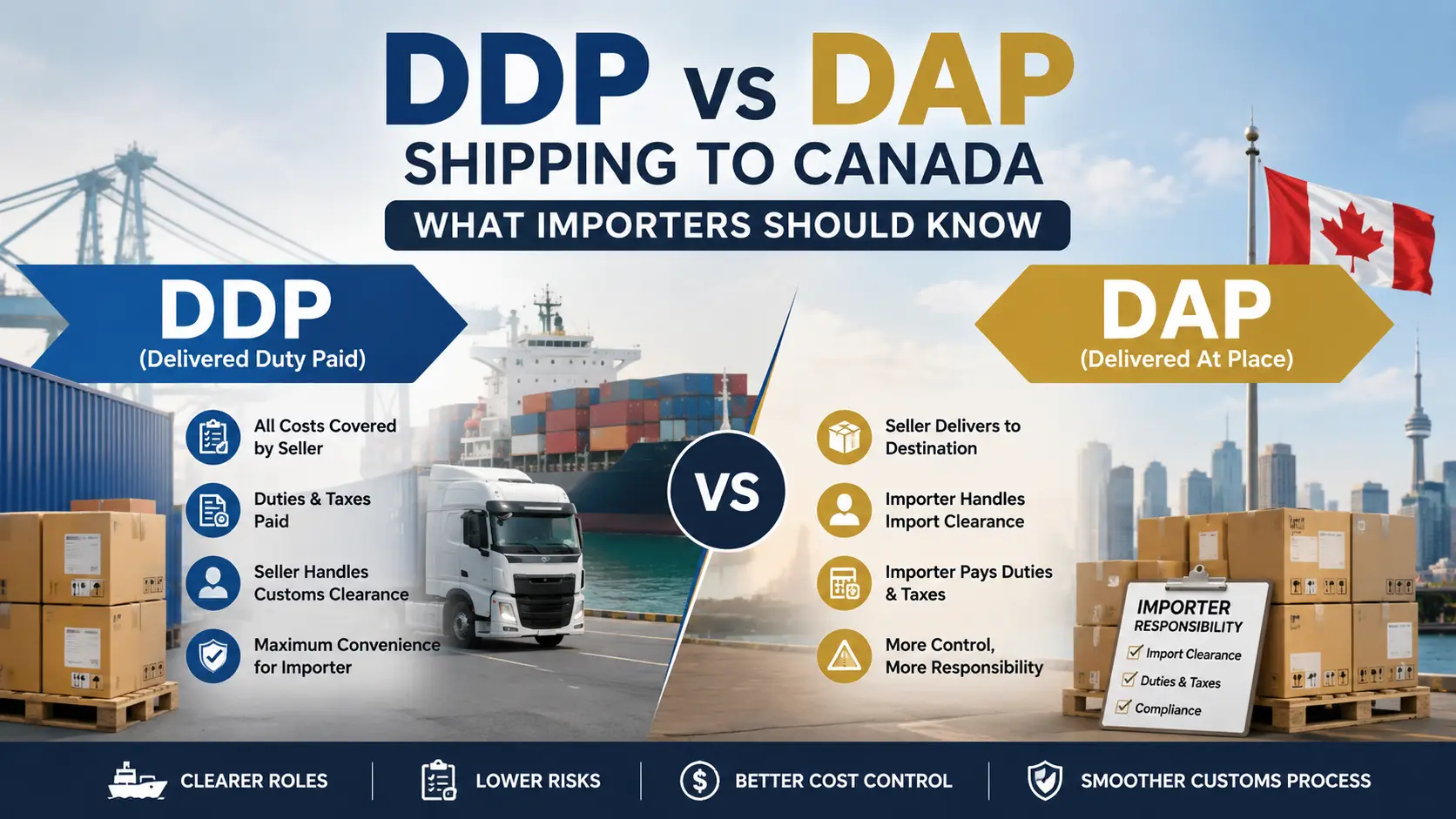
The central difference is responsibility for import clearance and import charges.
- DAP: the seller transports the goods to the named place, but the buyer handles Canadian import clearance and pays duties and taxes.
- DDP: the seller handles Canadian import clearance and pays the import duties and taxes required under the agreed scope.
Both terms can be used for air freight, sea freight, rail, trucking or multimodal transportation. Both normally transfer risk at the named destination while the goods remain on the arriving vehicle, ready for unloading. Neither term automatically requires the seller to purchase cargo insurance for the buyer.
The International Chamber of Commerce comparison of DAP and DDP confirms that import formalities remain with the buyer under DAP, while the seller assumes them under DDP.
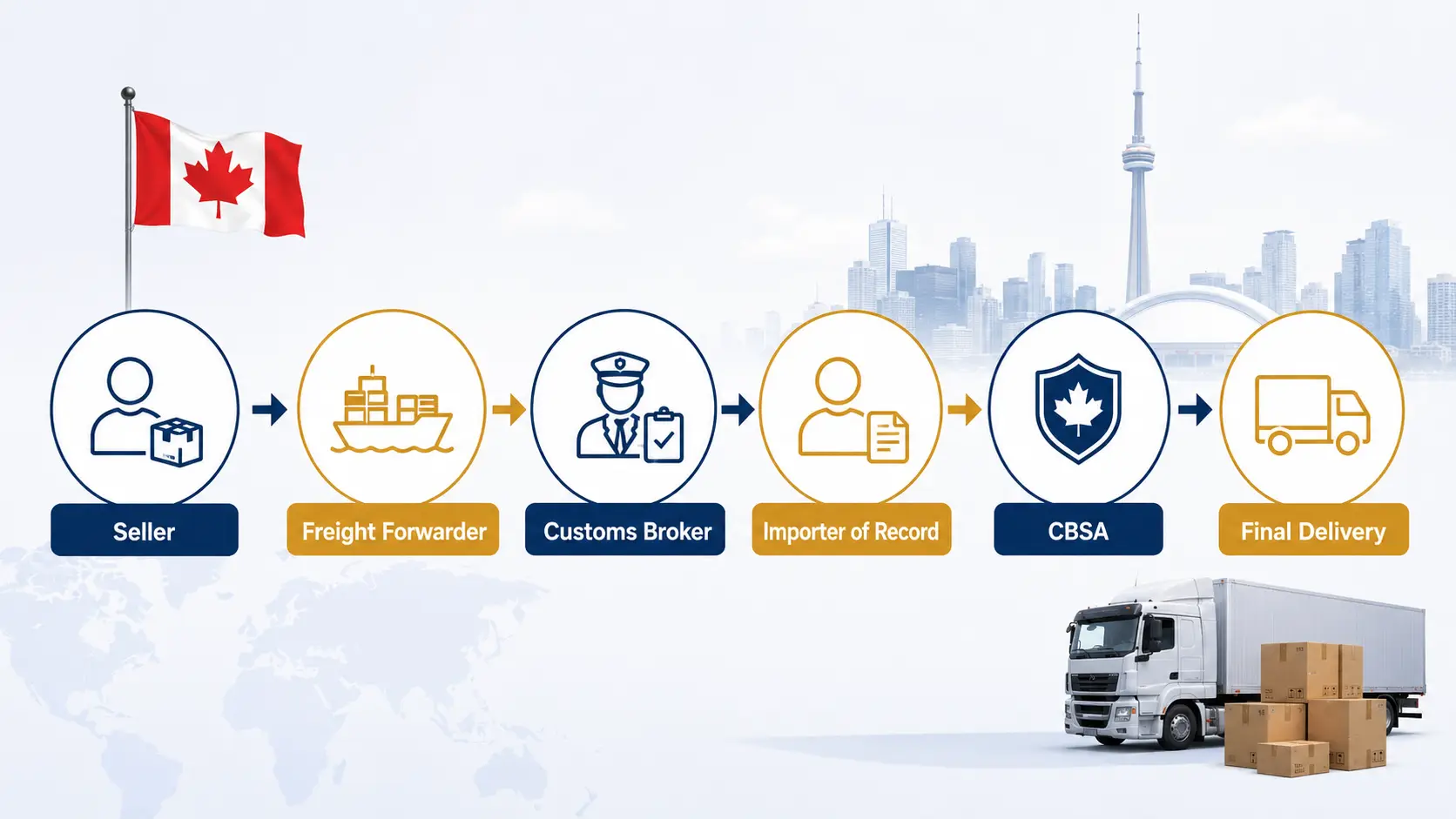
Importer of Record: The Most Important Canada-Side Question
Before selecting DDP or DAP shipping to Canada, identify the importer of record. This is the party connected to the commercial import declaration and the related customs obligations.
Under DAP, the Canadian buyer normally acts as importer of record. The buyer should ensure that its legal business name, Business Number, import-export account and customs broker authority are ready before the cargo arrives.
Under DDP, the seller cannot simply shift the importer role to an unknown third party without explaining the structure. The seller or its appointed import solution must be capable of completing the Canadian customs process and accounting for duties and taxes correctly. If a foreign seller intends to act as a non-resident importer, the required Canadian registration, customs and tax arrangements should be established before shipment.
Canadian businesses should ask for written confirmation of:
- The legal name of the importer of record
- The Business Number and import-export account used for clearance
- The customs broker responsible for filing the entry
- The party paying duties and GST to the Canada Border Services Agency
- The party retaining the customs accounting documents
- The process for post-entry corrections, reassessments or audits
TopShipping can help coordinate customs clearance for China-to-Canada shipments, but the importer structure and responsibilities must be confirmed before booking.
CARM, Duties and GST Under DAP
The Canada Border Services Agency uses the CBSA Assessment and Revenue Management system, known as CARM, as the official system of record for commercial import accounting and payment of duties and taxes.
For a standard DAP commercial shipment, the Canadian importer may need to:
- Obtain a Business Number and import-export program account.
- Register in the CARM Client Portal where applicable.
- Delegate authority to a licensed customs broker.
- Arrange financial security if release before payment privileges are required.
- Provide the commercial invoice, packing list, transport document and product information.
- Pay duties, GST and other charges assessed at import.
The applicable customs duty depends on the Canadian tariff classification, country of origin, tariff treatment and any special measures. GST is generally assessed on imported commercial goods unless an exemption applies. Excise tax, excise duty, provincial components or other government-agency charges may also apply to specific products.
A GST/HST-registered Canadian importer may be able to claim eligible input tax credits when the legal and documentary requirements are satisfied. This is one reason established Canadian importers may prefer DAP: the import declaration and tax documentation remain connected to their own customs and accounting records. Tax eligibility should be confirmed with a qualified Canadian adviser.
For detailed classification and landed-charge planning, review the TopShipping guide to HS codes, duties and taxes for Canada imports and the official CBSA CARM information.
How Duties and GST Work Under DDP
In a genuine DDP quotation, the seller includes the agreed import duties, taxes and clearance costs in the delivered price. This can reduce surprise charges for the Canadian buyer, but only when the quotation is based on accurate customs data.
A reliable DDP calculation requires:
- Correct product description and material composition
- Canadian HS classification
- Country of origin and applicable tariff treatment
- Commercial value and currency
- Freight and other additions relevant to customs valuation
- Applicable duty, GST, excise or special tariff measures
- Customs brokerage and disbursement costs
- Destination terminal and final-delivery charges
If the supplier quotes DDP before reviewing these details, the price may not be dependable. A low DDP rate can later create requests for additional payment, undervaluation, incorrect HS coding or an unclear importer-of-record arrangement.
DDP vs DAP Cost Comparison
| Cost Component | DAP | DDP |
|---|---|---|
| Supplier pickup and origin handling | Normally included up to the named destination, subject to quotation | Normally included, subject to quotation |
| International air or sea freight | Seller | Seller |
| Destination terminal handling | May be included or excluded; must be confirmed | Should be included when necessary to reach the named place, but exclusions must be reviewed |
| Customs brokerage | Buyer/importer | Seller under the DDP structure |
| Customs duty | Buyer/importer | Seller |
| GST and applicable import taxes | Buyer/importer | Seller under the agreed DDP price |
| Customs examination or inspection | Usually buyer unless otherwise agreed | Must be clarified; extraordinary inspection charges may be excluded |
| Storage, demurrage and detention | Depends on cause and contract | Depends on cause and contract; not automatically unlimited |
| Final delivery to named place | Seller | Seller |
| Unloading at final destination | Normally buyer | Normally buyer |
Importers should compare DDP and DAP using the same transport mode, cargo measurements, named destination and delivery requirements. A DAP quote excluding duty and GST cannot be compared directly with a DDP quote that includes those charges.
For a complete comparison, calculate the landed cost rather than only the freight rate:
Product cost + origin charges + international freight + insurance + customs brokerage + duties + GST/taxes + destination handling + final delivery + expected exception costs
The TopShipping guide to shipping costs from China to Canada explains the other variables that should be included in a commercial freight comparison.
When DAP Is Usually Better for Canadian Importers
DAP is generally more suitable when the Canadian buyer already has the systems and expertise needed to manage imports.
- The buyer has an active Canadian import account and CARM setup.
- The buyer works with its own licensed customs broker.
- The buyer wants control over HS classification and customs valuation.
- The buyer imports regularly and needs consistent customs records.
- The buyer wants direct visibility into duties, GST and brokerage charges.
- The buyer may need eligible import tax documentation for accounting purposes.
- The product is regulated and the Canadian buyer holds the required permits.
- The buyer wants to avoid depending on the seller’s Canadian import arrangement.
DAP can also reduce ambiguity where the foreign seller cannot legally act as importer in Canada. The seller still manages transportation to the agreed destination, while the Canadian buyer retains control of import compliance.
When DDP May Be the Better Option
DDP may be appropriate when the buyer wants a simplified duty-paid delivery and the service provider can demonstrate a compliant import structure.
- The buyer is a first-time importer and wants fewer separate logistics steps.
- The shipment is standard, well-documented and not heavily regulated.
- The seller has a legitimate Canadian import and customs arrangement.
- The DDP quote clearly identifies included duties, taxes and destination charges.
- The landed cost is fixed or commercially predictable.
- The shipment is going to a warehouse, 3PL, business address or fulfillment location.
- The buyer does not need to manage the customs broker directly.
- The parties have agreed on the exact named delivery place and Incoterms edition.
DDP should not be chosen solely because it appears easier. It is suitable only when customs valuation, HS classification, importer identity, tax treatment and documentation are transparent.
DDP and DAP Are Not the Same as Door-to-Door Shipping
Door-to-door describes the physical transportation scope: pickup from the supplier or warehouse in China and delivery to an agreed destination in Canada. It does not automatically determine who pays customs duties and GST.
A door-to-door shipment from China to Canada may operate under:
- DAP: door-to-door transportation with import clearance and duties handled by the Canadian buyer.
- DDP: door-to-door transportation with import clearance, duties and taxes handled under the seller’s duty-paid structure.
- Another agreed arrangement: depending on the sales contract and freight scope.
Therefore, “door-to-door” should never be treated as proof that a shipment is duty paid. The quotation must state the Incoterm, named place, importer of record and included charges.
Documents Required for DDP and DAP Shipping
Both DDP and DAP shipments require accurate commercial documents. The party handling import clearance changes, but the underlying customs information must still be correct.
| Document or Information | Why It Matters | Common Risk |
|---|---|---|
| Commercial invoice | Supports valuation, product description, seller, buyer, currency and sale terms | Vague descriptions, incorrect value or missing Incoterm |
| Packing list | Confirms cartons, pallets, dimensions, net weight and gross weight | Mismatch with physical cargo |
| Air waybill or bill of lading | Identifies the transport movement and shipment parties | Incorrect consignee or release instructions |
| HS code information | Supports Canadian classification and duty assessment | Using an unverified supplier code |
| Country-of-origin evidence | Supports tariff treatment and origin claims | Confusing shipping country with product origin |
| Importer details | Connects the customs declaration to the correct legal importer | Using an unknown or unauthorized importer |
| Permits and certificates | Supports regulated products and other-government-agency requirements | Checking requirements only after arrival |
| Dangerous goods documents | Required for applicable batteries, chemicals, liquids and hazardous cargo | Undeclared or incorrectly packaged regulated goods |
A detailed checklist is available in the guide to shipping documents from China to Canada.
Common DDP and DAP Mistakes
Using an Incomplete Named Place
“DDP Toronto” or “DAP Canada” is not precise enough for a commercial contract. The named place should identify the actual warehouse, terminal or delivery address because that point determines delivery, cost and risk transfer.
Assuming DDP Includes Every Possible Charge
DDP covers broad seller obligations, but the commercial quotation should still clarify exceptional customs examinations, storage, demurrage, detention, waiting time, special delivery equipment and unloading.
Assuming Door-to-Door Means Duty Paid
Door-to-door can be DAP or DDP. Duties and GST are included only when the quote and import structure explicitly provide for duty-paid delivery.
Ignoring the Importer of Record
A quote should not be accepted until the importer of record is identified. This is particularly important for DDP shipments arranged by overseas suppliers or online sourcing platforms.
Using the Supplier’s HS Code Without Canadian Review
HS codes are internationally harmonized only through the first six digits. Canadian tariff classification and statistical suffixes may differ from the supplier’s export code. Incorrect classification can change duty, permit and anti-dumping treatment.
Comparing Quotes with Different Scopes
One quote may include pickup, destination handling, customs clearance and delivery, while another covers only airport-to-airport or port-to-port freight. Compare quotations line by line using the same cargo data and destination.
Failing to Plan for Regulated Goods
Food, cosmetics, medical devices, batteries, chemicals, wireless products and other regulated goods may require permits, certificates, testing, labelling or agency review. DDP does not remove these requirements.
Questions to Ask Before Accepting a DDP Quote
- Who will be the importer of record in Canada?
- Which customs broker will file the import declaration?
- Are customs duties and GST included in writing?
- Which HS code and customs value were used to calculate the quote?
- Does the price include destination terminal handling and final delivery?
- Are customs examination, storage, demurrage and detention excluded?
- Will I receive a copy of the customs accounting document?
- How will post-entry corrections or reassessments be handled?
- Are product permits, licences and other-agency requirements covered?
- Is unloading included at the final destination?
Questions to Ask Before Accepting a DAP Quote
- What exact Canadian location is the named place?
- Does the quote include terminal, deconsolidation or rail charges?
- When must my customs broker receive the documents?
- Who will send the arrival notice and transport documents?
- Is the final delivery scheduled only after customs release?
- What delivery equipment, appointment or unloading requirements apply?
- Who pays storage if clearance is delayed by missing seller documents?
- Are there additional charges for remote-area or limited-access delivery?
DDP vs DAP Examples for China-to-Canada Shipments
Example 1: Established Wholesaler Importing by FCL
A Canadian wholesaler imports a full container every month, has an active CARM account and uses the same customs broker for all entries. DAP may be more appropriate because the importer controls classification, customs records, duty payments and tax documentation while the supplier arranges transportation to the warehouse.
Example 2: First-Time E-commerce Importer
A small e-commerce business is importing standard, non-regulated inventory and does not yet have an established customs process. A transparent DDP solution may reduce coordination, provided the importer-of-record structure, duty calculation and tax documents are confirmed before booking.
Example 3: Regulated Product Requiring Canadian Permits
A Canadian company imports a product requiring a licence or agency registration held by the Canadian buyer. DAP may be more practical because the buyer is already the compliant Canadian entity and can coordinate the permit and customs entry directly.
Example 4: Urgent Air Freight to a 3PL
An importer needs urgent inventory delivered from Shenzhen to a Canadian 3PL. Either DAP or DDP can work. DAP is suitable when the buyer’s broker can clear the cargo quickly. DDP may be suitable when the duty-paid provider has a verified import structure and the 3PL delivery requirements are included.
How to Choose Between DDP and DAP Shipping to Canada
Use the following decision framework:
| Business Situation | Usually Better Starting Point | Reason |
|---|---|---|
| Experienced Canadian importer with broker and CARM setup | DAP | Provides direct control of customs and tax records |
| First-time importer seeking a delivered price | DDP, subject to compliance review | Reduces separate freight and customs coordination |
| Regulated product with Canadian permits | DAP | The Canadian permit holder can manage import formalities |
| Standard low-complexity commercial goods | Either | Compare total landed cost and importer structure |
| Recurring high-value imports | DAP often preferred | Improves customs visibility and record consistency |
| Buyer needs a fixed delivered cost | DDP | Can consolidate freight, duty and tax into one agreed price |
| Seller cannot legally clear goods in Canada | DAP | The Canadian buyer handles import clearance |
The broader sales term should also be reviewed alongside EXW and FOB. The TopShipping guide to FOB vs EXW vs DDP for China-to-Canada shipping explains how supplier responsibilities change before the cargo begins its international movement.
Get a DDP or DAP Shipping Quote from China to Canada
TopShipping coordinates commercial air freight, LCL, FCL, customs support and final delivery from Chinese suppliers to Canadian warehouses, businesses, 3PLs and fulfillment locations. We can compare DDP and DAP options based on the cargo, importer readiness, customs requirements and delivery address.
For an accurate comparison, provide:
- Exact product description, material and intended use
- HS code if already confirmed
- Number of cartons, pallets or crates
- Gross weight and final package dimensions
- Supplier pickup address in China
- Cargo-ready date
- Commercial value and currency
- Canadian delivery address and postal code
- Required delivery date
- Whether duties and taxes should be included
- Any batteries, liquids, powders, chemicals or regulated components
Request a China-to-Canada freight quote and specify whether you want a DAP quotation, a DDP quotation or a side-by-side landed-cost comparison.