
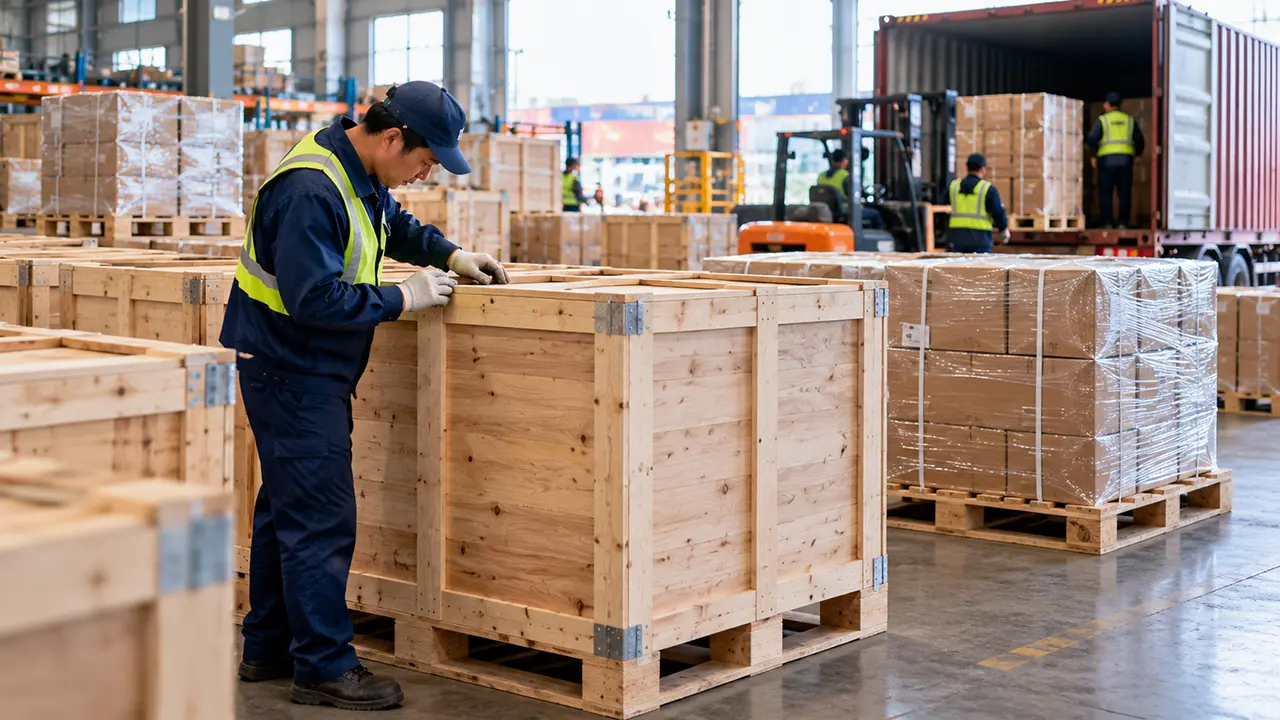
Export Packaging and ISPM 15 for Shipping from China to Canada
Commercial shipments from China to Canada that use solid-wood pallets, crates, skids or wooden dunnage generally must comply with International Standard for Phytosanitary Measures No. 15 (ISPM 15). Under the Canadian Food Inspection Agency’s (CFIA) import directive D-98-08, regulated wood packaging must be made from debarked wood, undergo an approved treatment and carry a valid, legible IPPC mark.
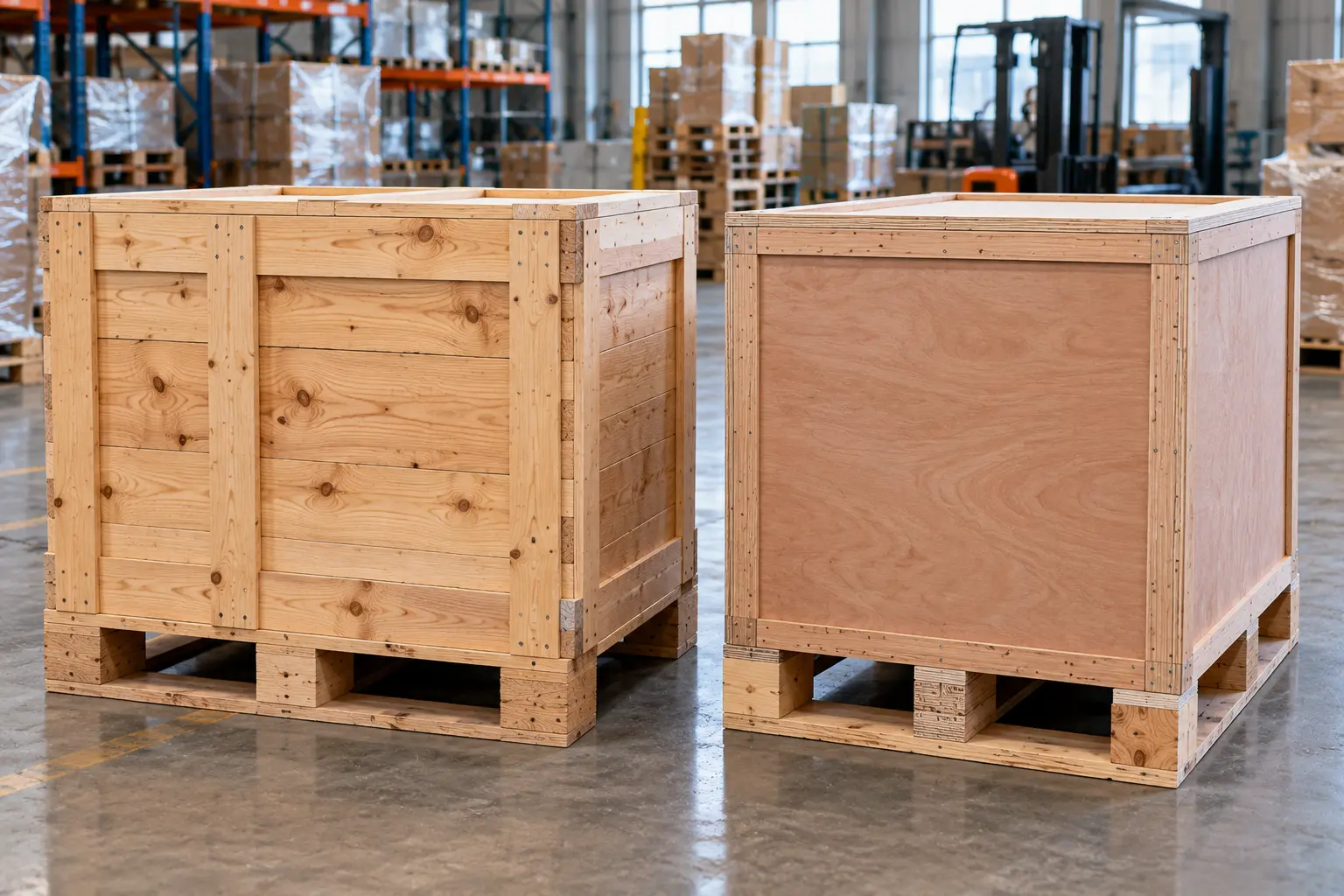
Packaging made entirely from certain processed wood materials, including plywood, particleboard and oriented strand board (OSB), is exempt from these wood-packaging requirements. However, a plywood crate with untreated solid-wood runners or framing is not automatically exempt.
For shipments using wood packaging originating in the People’s Republic of China, the CFIA does not accept a phytosanitary certificate as a substitute for the required ISPM 15 marking. Canadian importers should verify the packaging and its marks before the cargo leaves the supplier.
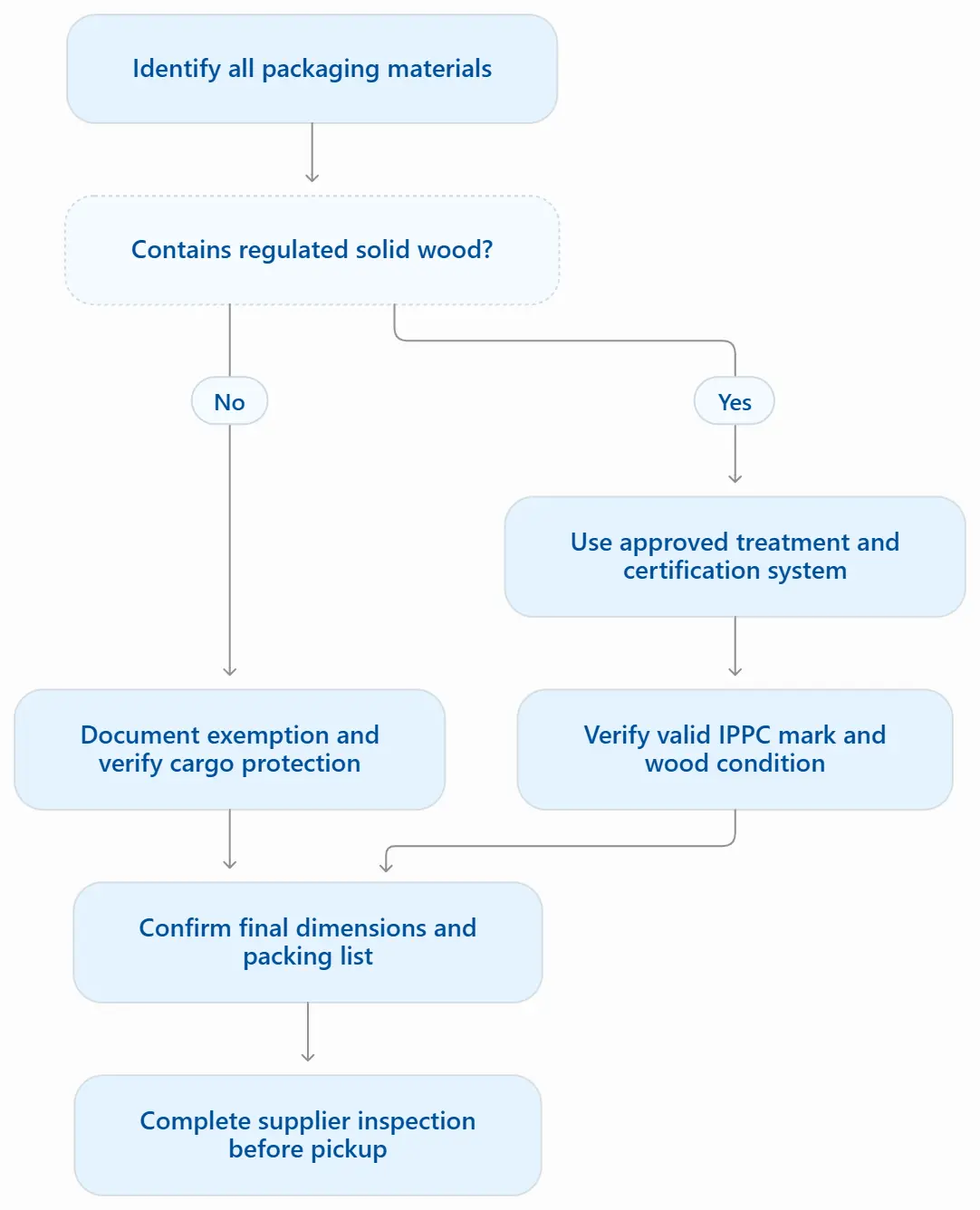
Before shipping, complete these five checks:
- Identify every solid-wood pallet, crate, skid, spacer and bracing component used with the shipment.
- Confirm whether the complete packaging unit is regulated or qualifies for an exemption.
- For regulated wood packaging, obtain evidence that an approved facility supplied appropriately treated and marked materials.
- Inspect the actual IPPC marks for legibility, durability and correct treatment information.
- Confirm the final packaging dimensions, weight, cargo protection and handling requirements with the shipping provider.
ISPM 15 Requirements for China-to-Canada Shipping at a Glance
The first decision is whether the materials supporting or protecting the cargo are regulated wood packaging. The requirements depend on construction materials, not simply whether the goods travel by ocean or air.
| Packaging Type | ISPM 15 Status | Importer Check |
|---|---|---|
| Solid-wood pallet | Regulated | Approved treatment, debarked wood and valid IPPC mark |
| Solid-wood shipping crate | Regulated | Compliant treatment and marking on the packaging unit |
| Solid-wood skid or machinery base | Regulated | Check base members, supports and markings |
| Wooden blocks, braces and loose dunnage | Regulated when made from non-exempt wood | Verify each relevant piece, especially after cutting |
| Crate made entirely from qualifying plywood or OSB | Generally exempt | Confirm there are no regulated solid-wood components |
| Plywood crate with solid-wood framing | Regulated | Do not assume the plywood panels exempt the entire unit |
| Packaging made entirely from thin wood of 6 mm or less | Exempt under D-98-08 | Verify the thickness and complete construction |
| Cardboard cartons or plastic pallets | Outside solid-wood packaging requirements | Check any separate wooden pallet or support used beneath them |
These classifications follow the CFIA’s D-98-08 wood packaging import directive, effective April 1, 2026. Product-specific import requirements may still apply separately to the goods inside the packaging.
What Is ISPM 15 and Why Does Canada Require It?
ISPM 15 is an international phytosanitary standard developed under the International Plant Protection Convention (IPPC). Its purpose is to reduce the risk of pests spreading between countries through wood packaging used in international trade.
Untreated wood used for pallets, crates or cargo supports can carry insects and other organisms that threaten forests and plant resources. Approved treatment reduces this risk, while the standardized IPPC mark provides a recognized way to identify compliant packaging.
Canada implements requirements for regulated wood packaging through CFIA directive D-98-08. The directive applies to wood packaging arriving from China and other regulated origins, with a specific bilateral exemption for qualifying trade involving the continental United States.
ISPM 15 applies to the packaging surrounding or supporting the goods. It does not automatically establish whether a wooden product being imported as merchandise is admissible. Lumber, decorative wood items and other wood commodities may be subject to separate CFIA requirements.
For the broader responsibilities involved in commercial importing, see our step-by-step guide to shipping commercial goods from China to Canada.
Which Export Packaging Materials Need ISPM 15 Treatment?
Wooden pallets and skids
Solid-wood pallets and skids commonly support cartons, machinery, wholesale goods and consolidated freight. When this wood packaging is regulated, it must meet Canada’s treatment, debarking and marking requirements.
Ask the supplier whether the pallets are made from solid sawn timber, processed wood or a combination of materials. A pallet described as an “export pallet” is not necessarily compliant unless its construction and markings support that claim.
Wooden crates and machinery packaging
Heavy equipment, fragile machinery and large commercial products may be secured inside wooden crates or mounted on timber bases. These units often combine plywood panels, solid-wood frames, runners, blocks and bracing.
A mixed-material crate remains regulated if it contains solid wood that does not qualify for an exemption. Inspect the complete structure rather than checking the outer panels alone.
Wooden dunnage, blocking and bracing
Dunnage refers to material used to support or secure cargo during transport. Solid-wood blocks, bearers, spacers and braces can fall within the Canadian wood-packaging rules even when they are not part of a traditional pallet or crate.
Loose dunnage requires special attention because cutting treated timber into smaller lengths can remove or separate the original IPPC markings. Suppliers and loading teams should ensure that the finished pieces remain identifiable as compliant.
Cardboard cartons placed on wooden pallets
Cardboard cartons do not require ISPM 15 treatment. However, the solid-wood pallet beneath them is a separate packaging component and may be regulated.
For example, a shipment of 50 cartons containing finished clothing may still present a wood-packaging compliance issue if the cartons are loaded on unmarked solid-wood pallets.
Which Packaging Materials Are Exempt from ISPM 15?
Canada’s wood-packaging directive recognizes several exemptions for materials considered lower risk. The important condition is that the relevant packaging must meet the complete exemption description.
| Material | Exemption Principle | Important Limitation |
|---|---|---|
| Plywood | Processed wood produced using manufacturing processes such as heat, glue or pressure | Solid-wood runners or braces can make the combined packaging regulated |
| OSB and particleboard | Qualifying manufactured wood materials | Check the complete packaging unit |
| Fibreboard and qualifying veneer | Processed wood exemption | Confirm material composition |
| Thin wood | Entire packaging made from wood 6 mm thick or less | The exemption does not cover thicker solid-wood members |
| Wood shavings, sawdust and wood wool | Specified stabilizing materials | Do not confuse these materials with solid-wood blocking |
| Plastic or metal packaging | Not solid-wood packaging | Separate wooden supports remain subject to review |
| Cardboard-only packaging | Not regulated wood packaging | Check the pallet or transport base separately |
An exemption from ISPM 15 does not guarantee that a packaging method is structurally suitable for international freight. Cardboard, plywood, plastic or metal packaging must still adequately support and protect the actual cargo.
For businesses combining goods from different factories, our freight consolidation guide explains the importance of consistent pallet sizes, warehouse receiving specifications and cargo handling information.
What Are Canada’s ISPM 15 Requirements in 2026?
Under the CFIA’s April 2026 directive, regulated wood packaging entering Canada from China must meet three main conditions:
- Debarked wood: The wood must be debarked within the limited bark tolerances described in the directive.
- Approved treatment: The wood must undergo a treatment recognized under ISPM 15.
- Compliant IPPC marking: The packaging must bear the required treatment and identification mark.
Approved treatment methods
The CFIA recognizes the treatment methods listed in Annex 1 of ISPM 15. Heat treatment is commonly associated with commercial export pallets, but it is not the only method recognized in the current Canadian directive.
| Code | Treatment | Meaning |
|---|---|---|
| HT | Conventional heat treatment | Approved treatment using a heat or steam chamber |
| DH | Dielectric heating | Approved heating method using dielectric energy |
| MB | Methyl bromide fumigation | Recognized fumigation treatment under the applicable standard |
| SF | Sulphuryl fluoride fumigation | Recognized fumigation treatment under the applicable standard |
For conventional heat treatment, ISPM 15 specifies a minimum wood temperature of 56°C throughout the profile of the wood, including its core, for at least 30 continuous minutes. A supplier’s statement that the wood was dried, warmed or placed in a kiln is not enough to establish compliance by itself.
The treatment must be carried out within an approved certification system. Importers should rely on properly treated and marked packaging supplied through authorized facilities, not independently apply an IPPC stamp after packing.
Special rule for wood packaging originating in China
The CFIA directive states that, under a bilateral arrangement, phytosanitary certificates are not accepted for the entry of wood packaging material originating in the People’s Republic of China.
For this trade lane, the practical instruction is to ensure that regulated wood packaging is correctly treated and bears the required ISPM 15 mark before export. Do not plan to replace a missing mark with a fumigation or phytosanitary certificate.
Important Rule for China-Origin Wood Packaging
Does routing through the United States remove the requirement?
No. Routing a Chinese shipment through a US port, airport or distribution point does not automatically qualify its wood packaging for the Canada-US exemption.
The exemption is limited to qualifying wood packaging moving directly from the continental United States and made entirely from eligible Canadian or continental-US-origin wood. Wood packaging from China must not be treated as exempt simply because the goods transit through the United States.
How to Read an ISPM 15 or IPPC Mark on a Wooden Pallet
The internationally recognized mark contains information identifying the approved certification system and the treatment applied to the wood packaging.
The CFIA requires the mark to include the following components:
| Mark Component | What It Identifies | What to Check |
|---|---|---|
| IPPC Symbol | Internationally recognized wood-packaging treatment mark | Present on the left side of the mark |
| Country Code | Country associated with the certified wood-packaging production system | Valid two-letter ISO country code |
| Producer / Treatment Provider Code | Facility or responsible entity recognized by the national plant protection organization | Present and legible, separated from the country code by a hyphen |
| Treatment Code | Approved treatment applied to the wood packaging | For example, HT, DH, MB or SF |
A mark for wood packaging certified in China will normally use the country code CN. However, the code identifies the relevant country of wood-packaging production or certification, not necessarily the country where the merchandise itself was manufactured.
Mark visibility and permanence
The mark must be legible, durable, non-transferable and enclosed within the required border. It should be visible when the wood packaging is in use, preferably on at least two opposite sides of the packaging unit.
Hand-drawn marks and removable tags are not acceptable substitutes. An illegible mark can also cause non-compliance.
For authentic examples of the prescribed mark, use Appendix 1 of the official CFIA directive or the IPPC’s ISPM 15 implementation resources. Do not rely on a generic symbol found in an online product listing as proof that a particular pallet has been approved.
Do used or repaired pallets remain compliant?
Previously treated wood packaging may be reused when it remains compliant with the applicable standard. However, repairs and remanufacturing can change the treatment and marking requirements.
If damaged pallet boards or crate components are replaced, the supplier must ensure that the repaired or remanufactured unit meets the relevant ISPM 15 rules. A mark on an old pallet should not be treated as proof that newly installed wood components are compliant.
Export Packaging Checklist: What to Confirm with Your Chinese Supplier
The most effective control point is before the goods are collected from the supplier or accepted at an export warehouse.
Send the supplier a specific packing instruction rather than a general request to use “export-standard wooden packaging.”
Step 1: Confirm the finished cargo and packing method
Identify the product type, quantity, unit weight, carton dimensions, handling sensitivity and intended mode of transportation. Determine whether the goods require individual cartons, pallets, wooden crates, skids or internal blocking.
Step 2: Determine whether regulated solid wood will be used
Ask whether the packing structure contains solid sawn timber. Check not only the visible crate walls but also internal supports, runners, bottom frames and additional braces.
Step 3: Confirm approved treatment and marking
If the packaging is regulated, ask the supplier to use compliant wood packaging from an authorized producer or treatment provider. Confirm that the unit has a legible and appropriate IPPC mark.
Step 4: Obtain real photographs before pickup
Request clear photographs of the completed packaging, including:
- All sides of the pallet or crate
- The complete IPPC mark, readable in the original photograph
- Solid-wood supports and internal bracing where visible
- Final carton or pallet quantities
- Any visible damage, bark, contamination or signs of pests
Photographs are useful for pre-shipment review and resolving questions with the supplier, but photographs alone do not replace the actual ISPM 15 requirements.
Step 5: Confirm the cargo’s real shipping measurements
Record the final length, width, height and gross weight after palletizing or crating. Do not quote or book freight using only the dimensions of the product without its protective packaging.
This is especially important when selecting container space. Our 20ft, 40ft and 40HQ container comparison explains how equipment dimensions and cargo geometry affect container planning.
Step 6: Check the packing list and cargo handover details
Ensure that the packing list reflects the final number of handling units, carton counts, dimensions and gross weight. Share the required receiving instructions with the supplier before pickup.
Use our China-to-Canada shipping documents checklist to confirm the broader commercial invoice, packing list and transportation document requirements.
ISPM 15 and Cargo Protection: Two Different Packaging Objectives
ISPM 15 is a phytosanitary measure. It addresses the risk associated with wood packaging and plant pests; it is not a certification that the goods inside the package are protected against impact, vibration, crushing or moisture.
Export packaging therefore needs two separate reviews:
| Objective | Questions to Ask | Typical Control |
|---|---|---|
| ISPM 15 Compliance | Is the wood regulated, treated, debarked and marked? | Material review and IPPC mark verification |
| Structural Protection | Can the unit support the gross weight and handling conditions? | Appropriate pallet or crate design |
| Movement Prevention | Can the contents shift during loading or transport? | Blocking, bracing, restraints and suitable internal supports |
| Moisture Protection | Could condensation or exposure damage the product? | Appropriate protective wrapping, barriers and moisture-control planning |
| Handling Safety | Can the unit be lifted, stacked or secured correctly? | Forklift access, weight distribution and handling instructions |
| Document Accuracy | Do final packing details match the shipment records? | Final measurement and packing-list review |
Prevent movement inside wooden crates
Fragile products and heavy equipment may need internal supports that prevent movement during lifting and transportation. If solid wood is used for these supports, consider the applicable wood-packaging rules as part of the packing design.
Protect goods from moisture
Sea freight cargo may experience changing temperatures and humidity. A clean, compliant wooden crate does not by itself prevent condensation or moisture-sensitive product damage.
The appropriate solution depends on the product, voyage conditions, packaging design and material compatibility. Avoid generic promises that one desiccant quantity or wrapping method is suitable for every container.
Check weight and loading arrangements
Large crates and machinery skids must be appropriate for the equipment used at origin and destination. A pallet that meets ISPM 15 can still be unsafe if it cannot support the cargo weight or creates an unsuitable lifting configuration.
For containerized commercial freight, our sea freight shipping guide covers the broader considerations involved in selecting and preparing LCL and FCL shipments.
Do ISPM 15 Rules Differ for Air Freight, LCL and FCL?
Canadian wood-packaging entry requirements do not disappear when the transportation method changes. Regulated wooden packaging requires the appropriate treatment and marking whether it accompanies cargo moved by air, sea, rail or road.
The handling points that need attention can still differ:
| Shipping Method | Common Packaging Issue | Practical Check |
|---|---|---|
| Air Freight | Crates, wooden skids, package size and gross weight | Confirm ISPM 15 compliance and airline cargo acceptance |
| LCL Sea Freight | Mixed supplier pallets and warehouse handling | Check each handling unit before CFS receiving |
| FCL Sea Freight | Container bracing, solid-wood supports and loading structure | Check packaging and dunnage before container sealing |
| Heavy or Oversized Cargo | Large timber bases and additional blocking | Confirm load-bearing design and all regulated wood components |
For goods loaded into a container, distinguish the wooden packaging that remains with the cargo from shipborne dunnage used and later discharged separately at a Canadian port. The CFIA has additional program requirements for the discharge of shipborne dunnage by authorized terminals and vessel-related parties.
Those specialized shipborne dunnage procedures should not be confused with ordinary palletized merchandise being delivered to a Canadian warehouse.
What Happens If Wood Packaging Is Not ISPM 15 Compliant?
Non-compliant wood packaging can create a problem even when the goods inside the shipment are otherwise admissible.
The CFIA or Canada Border Services Agency (CBSA) may inspect wood packaging. Examples of issues include missing or illegible marks, excessive bark, live pests, signs of pest activity or failure to meet treatment and other applicable requirements.
Depending on the circumstances and direction of the authorities, non-compliant materials may be subject to removal, disposal or other required action. Costs associated with non-compliance can fall on the owner, importer or party in possession or control of the goods or packaging.
Do not assume that an unmarked pallet can simply be stamped, repaired or fumigated after arrival without an approved process.
The applicable enforcement procedures are explained in the CFIA’s wood packaging import guidance and directive D-98-08.
Common packaging mistakes to avoid
| Mistake | Why It Is a Problem | Better Approach |
|---|---|---|
| Using an untreated solid-wood pallet | Fails the applicable phytosanitary requirements | Use properly treated and marked packaging |
| Assuming plywood makes the entire crate exempt | Solid-wood runners or framing may still be regulated | Review all components |
| Relying only on a supplier’s fumigation certificate | Does not substitute for the required ISPM 15 mark for China-origin wood packaging | Verify the actual marking |
| Cutting marked timber into unmarked dunnage | Finished pieces may no longer demonstrate compliance | Plan compliant dunnage before loading |
| Using repaired pallets without checking replacement wood | Repairs may affect certification and marking requirements | Verify the complete repaired unit |
| Submitting pre-packing product dimensions | Freight calculations and handling arrangements may be wrong | Measure the finished handling unit |
Final Pre-Shipment Packaging Checklist for Canadian Importers
Use this checklist before accepting the final packing arrangements or confirming cargo pickup in China.
- Confirm the exact products, quantities and proposed packing method.
- Identify all solid-wood pallets, crates, skids and bracing.
- Check whether the packaging qualifies for an exemption under D-98-08.
- Confirm approved treatment for regulated solid-wood packaging.
- Verify the actual IPPC mark on each relevant packaging unit.
- Ensure the mark is legible, durable and not hand-drawn.
- Check for excessive bark, visible pests or signs of infestation.
- Review any reused or repaired wood packaging.
- Confirm the structural strength of pallets, bases and crates.
- Confirm that internal restraints and bracing are suitable for the cargo.
- Check moisture-sensitive and fragile goods for appropriate protection.
- Record final handling-unit dimensions and gross weights.
- Request real packaging and marking photographs before pickup.
- Update the final packing list using the actual packaged measurements.
- Confirm warehouse, carrier and destination handling requirements.
If the supplier cannot identify the packaging materials or provide clear evidence of the required markings, resolve the issue before cargo collection rather than waiting for a Canadian inspection.
Plan Export Packaging and Freight from China to Canada
Packaging decisions affect more than customs compliance. They influence loading safety, cargo protection, freight measurements, warehouse handling and the final delivery arrangements in Canada.
When planning a shipment, provide TopShipping with the supplier’s pickup location, product description, final packed dimensions, gross weight, number of handling units and Canadian destination. If wooden packaging is used, include photographs of the completed pallets, crates or skids and their IPPC marks.
For the full transportation process from Chinese supplier pickup to delivery in Canada, review our China-to-Canada shipping guide.
A successful export packing plan should be established before goods are collected: identify regulated materials, verify compliance, protect the cargo and then finalize the freight arrangements.
FAQ — Export Packaging and ISPM 15 for Shipping from China to Canada
Solid-wood pallets shipped from China to Canada generally need to meet ISPM 15 requirements. Regulated packaging must be made from debarked wood, undergo an approved treatment and carry a valid IPPC mark. Packaging constructed entirely from qualifying processed wood, such as plywood or oriented strand board, may be exempt. The importer should check the complete packaging structure, including runners, blocks and supports, rather than relying only on the supplier's description.
A crate constructed entirely from qualifying processed wood, such as plywood or OSB, is generally exempt from the wood-packaging requirements in CFIA directive D-98-08. However, a crate with plywood walls and solid-wood framing, skids or supports is not automatically exempt. Any regulated solid-wood components must be considered when assessing the compliance of the complete packaging unit. Check the construction before finalizing export packing.
No. For wood packaging originating in the People's Republic of China, the CFIA specifically states that phytosanitary certificates are not accepted as a substitute for the prescribed ISPM 15 marking system. A supplier's treatment or fumigation paperwork does not remove the need to verify the actual compliant mark on regulated packaging. Canadian importers should resolve missing or illegible markings before the goods leave the origin facility.
A compliant IPPC mark includes the prescribed IPPC symbol, a two-letter country code, an authorized producer or treatment provider code, and an approved treatment code such as HT, DH, MB or SF. The mark must meet the required layout and be legible, durable and non-transferable. It should be visible when the packaging is in use, preferably on at least two opposite sides. A hand-drawn mark or removable tag is not an acceptable substitute.
Yes. Canada's regulated wood-packaging requirements apply based on the materials and applicable origin rules, not solely on the transportation method. Solid-wood crates used for air freight, wooden pallets shipped as LCL cargo and dunnage used in FCL shipments may all be subject to ISPM 15. The handling and carrier-acceptance requirements can differ, but changing from sea freight to air freight does not make regulated wood packaging exempt.